TOM FRANCIS
REGRETS THIS ALREADY
Hello! I'm Tom. I'm a game designer, writer, and programmer on Gunpoint, Heat Signature, and Tactical Breach Wizards. Here's some more info on all the games I've worked on, here are the videos I make on YouTube, and here are two short stories I wrote for the Machine of Death collections.


Search

An Idea For More Flexible Indie Game Awards
I just read Zach Gage’s post proposing some changes to the IGF. My summary of his problems with the current system would be:
- For ‘best audio’, it’s not clear whether jurors should a) prioritise audio alone, or b) take into account the quality of the rest of the game and how important audio is to it.
- Currently jurors usually go with b), which “leads to games that are very well designed making it into multiple categories”, reducing the number of distinct games recognised.
- Medium-length single player games also get disproportionately recognised because they’re easier to judge than huge or multiplayer games, and feel more significant than tiny mobile games.
Generally I think b) is fine, but I do agree that over-celebrating single games is needless, and I think the categories themselves are a pretty rigid and inadequate way of capturing what’s worth celebrating in games.
Zach’s suggestion is to change the categories to reflect game length/type, and have developers choose one category to submit for. I’m not wild about this because a) the categories are still rigid and don’t capture gaming’s diversity of form, and b) a developer could screw themselves by miscategorising their game, which is not the skill we are trying to evaluate or award.
As it happens I’ve been thinking about a different kind of award ceremony I’d like to see ever since the BAFTAs in 2013, and I think it would address a lot of this. Continued

Heat Signature: Infinitely Scaling Vapour Layers
Excerpt from an e-mail I just sent to artist John: Continued

Star Wars VII (Spoiler Safe)
I enjoyed it a lot! It sounds like all my bigger-Star-Wars-fan friends did too, which is great. I’ll keep this spoiler-free and then let people who’ve seen it click the spoiler buttons for what I’m specifically talking about.
It alternates a bit between three different ways you could approach making a Star Wars sequel: Continued
Help Me Structure Some Code Better In Heat Signature
Update: Solved! See bottom of post for details.
Hello, more experienced programmers than me! I could use your advice. There’s a code-pattern I’ve been using for a while and I’ve just discovered a problem with it, but I can’t see a great alternative either. I will explain by example: Continued
A Tale Of Arabian Nights
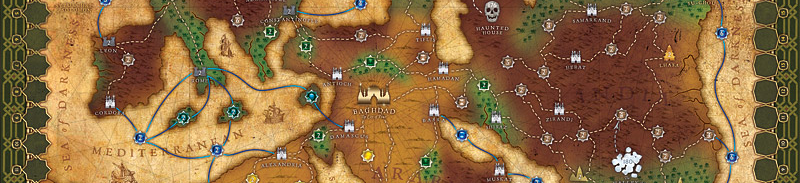
I just played my first full game of Tales of Arabian Nights, with my friends Chris and Pip. It’s a board game that’s very story driven: each turn you have an ‘encounter’, and choose a vague verb for how to deal with it: aid, pray, rob, follow, avoid, etc. Then another player looks up and reads out a more detailed account of what happened, and how it affects you. These chain together into a journey, and you win by accumulating Story points and Destiny ones. This was my character’s story: Continued
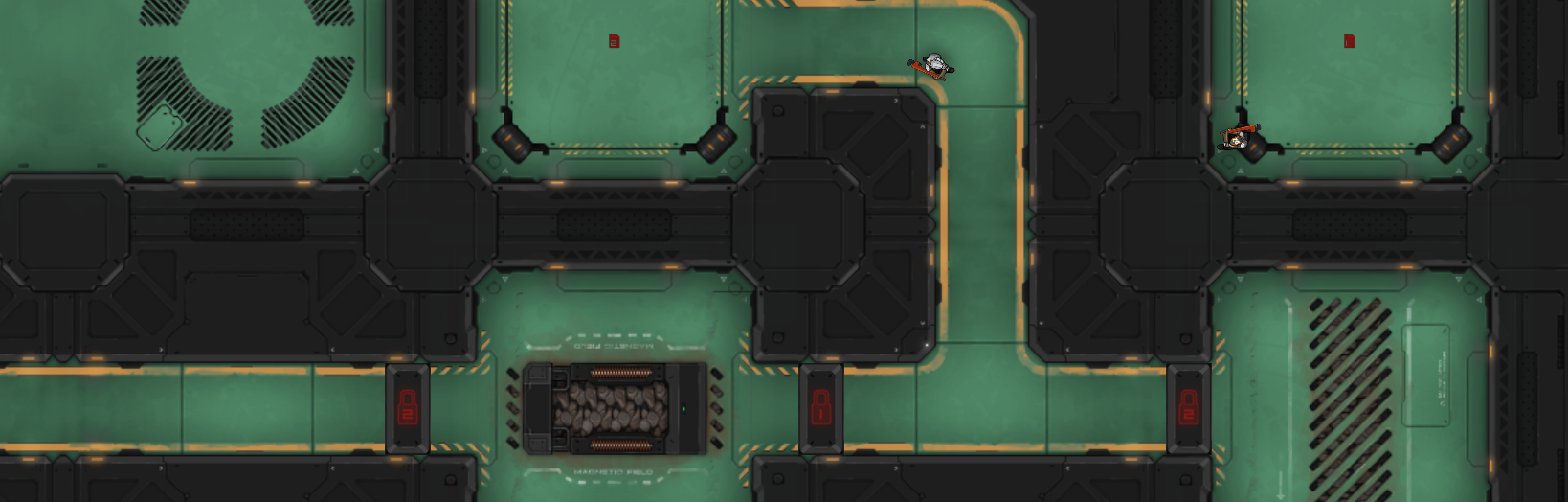
Generating Locks And Keys In Heat Signature’s Ships
My summary of where we are after the last ship-generation post would be:
- The Drunk Snake is probably the best algorithm so far, for generating the amount of branching and length of critical path we want while looking fairly pleasing.
- But! There’s a lot of room for improvement.
- But! Improvement is getting harder: we don’t have a huge amount of control with these types of algorithms, so we can’t fine-tune things precisely without a big rewrite.
- And! We don’t know enough about our requirements to get really fussy yet – maybe some things that seem bad now will be good when we have certain security devices or guard patrols in.
Thoughts On Fallout 4 And Invisible Inc’s Contingency Plan
On the latest two Crate and Crowbar podcasts I talk about what I’ve been up to in these two games, and what I think of them. Here are the bits where I do that, Fallout first! Continued
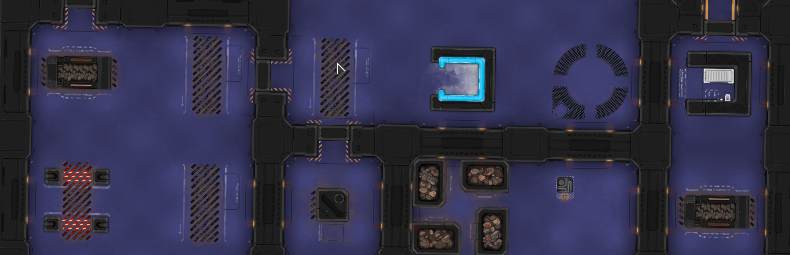
Laying Out Heat Signature’s Ships: Snakey Vs Branchy
Last time I covered how I taught Heat Signature to build ships out of sectors, join those sectors together, lock some of those doors, then place keycards in the right places to ensure they’re all openable. I’d got the algorithm generating layouts like this, which is great: Continued
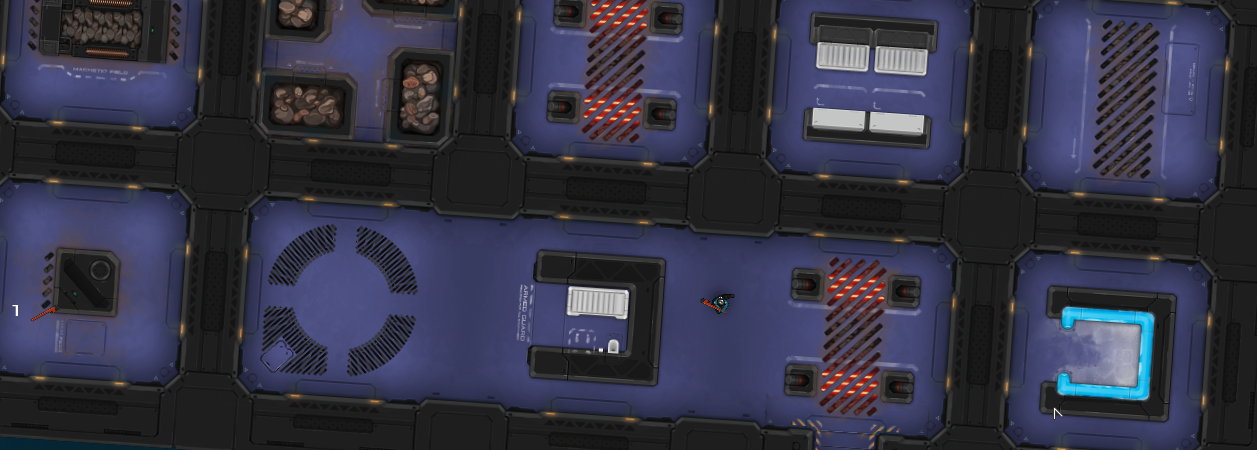
Teaching Heat Signature’s Ship Generator To Think In Sectors
I haven’t talked about the way I randomly generate spaceships in Heat Signature since this post – before it even had actual art. That’s partly because I’ve barely touched it since then. I showed the game to developer friends and the press in LA and SF a few weeks ago, and got lots of great input and ideas, but the main thing I came away thinking was: the on-board game needs to be more interesting. And I think better ship interiors are the foundation of that. Continued
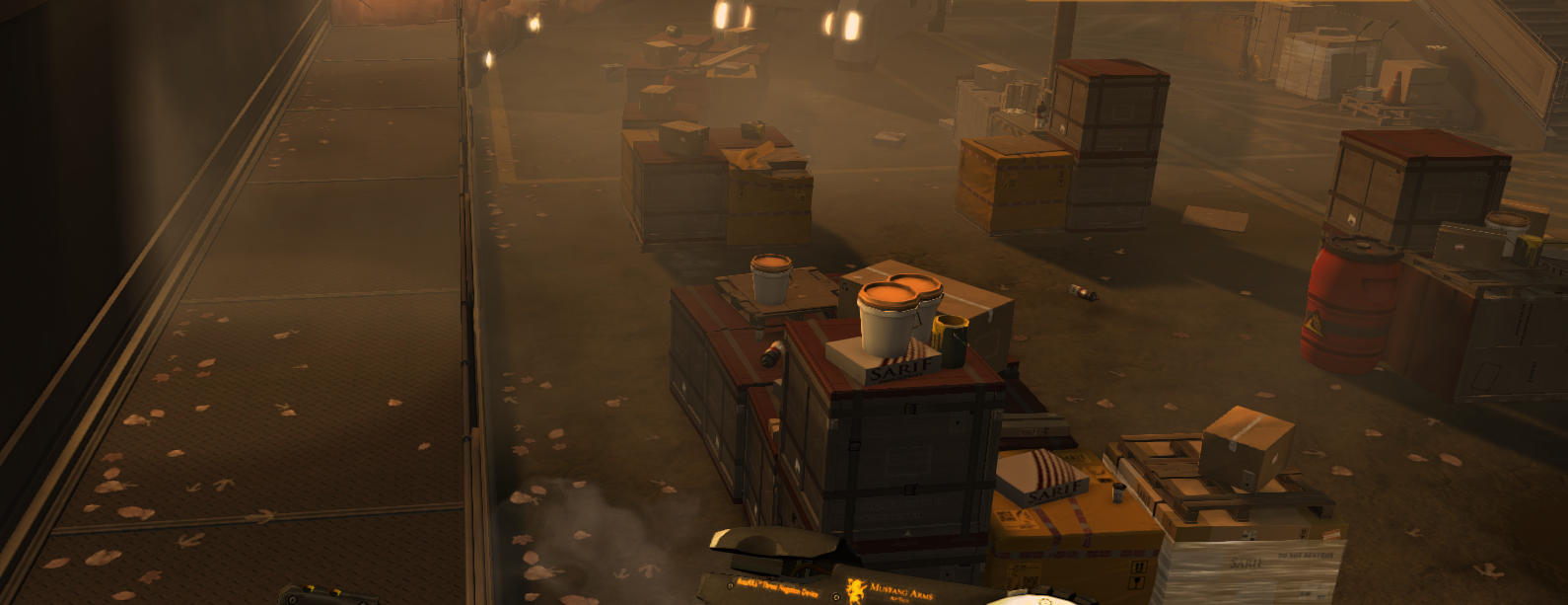
What Works And Why: Multiple Routes In Deus Ex
Deus Ex’s appeal is often boiled down to ‘lots of options’, but obviously that doesn’t quite cover it. Right now I’m looking to redesign the ‘sneaking inside spaceships’ part of Heat Signature, so I need more than a vague line about what’s cool about Deus Ex – I need a practical understanding of specifically why it works, and why similar games don’t. So I’m replaying Deus Ex 1 and 3, to figure out what it is I want to steal. And I think it is options, but it’s not just number. They have to fill a certain set of requirements, and this is my attempt to nail down what those are.
I’ve been mostly playing Human Revolution so far, but I’ll also use some examples for DX1 since there’s so much overlap. Continued

The Martian (The Book)
No spoilers
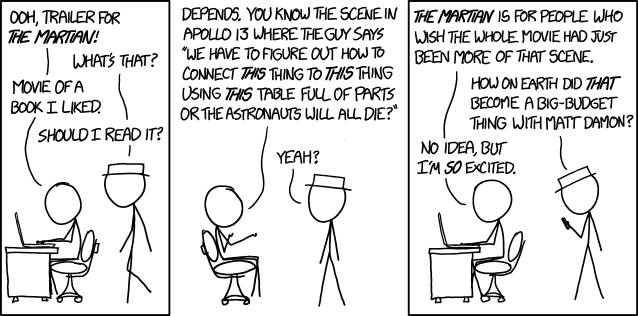
The other day I really wanted something to do that would give my eyes a break from focusing on things right in front of them. So I looked for audiobooks, and remembered that I’d been planning to read The Martian – mostly because of this comic and its hover-text:
Doing Your Job In Metal Gear Solid V
This post is part of a series. I mention abilities and tools but no story spoilers.
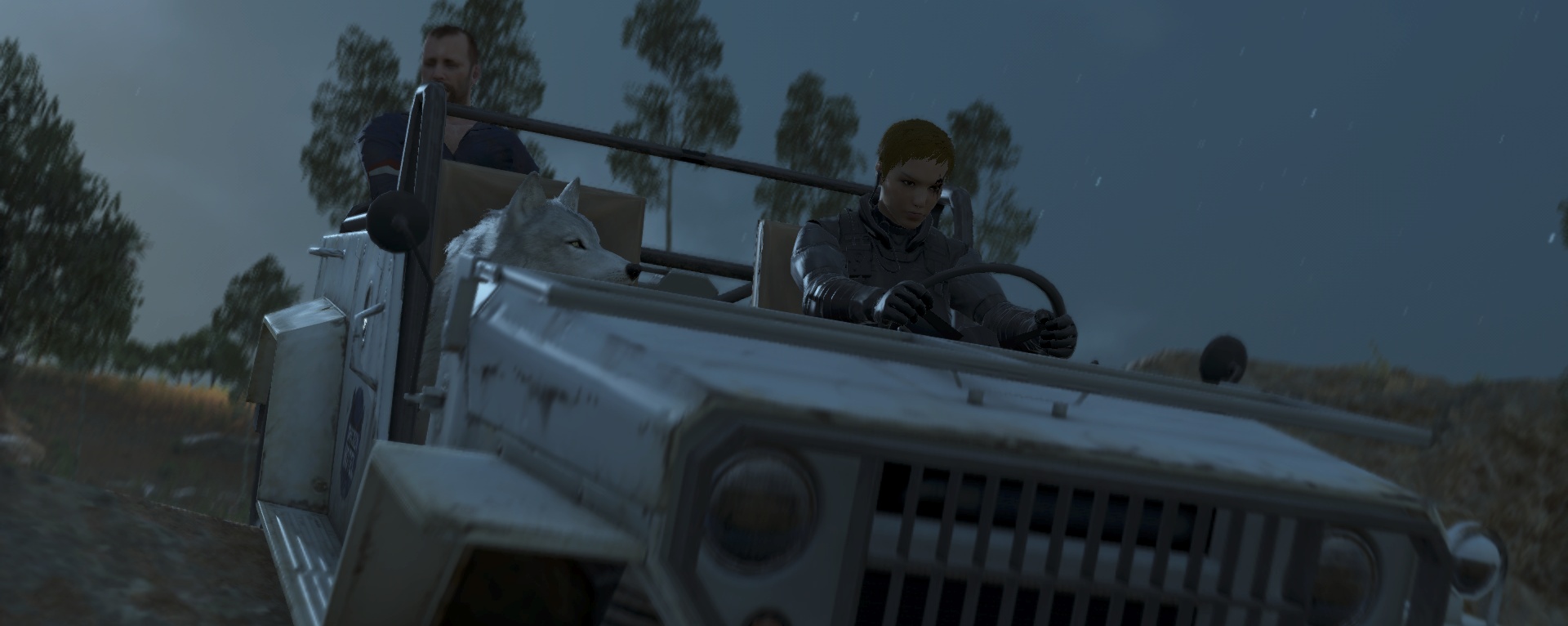
A lot of the time, MGS V is just a very good stealth game. You have lots of tools to distract, evade or take down your enemies, and they’re all very satisfying to use – just like Deus Ex 3. Its levels are encampments dotted seamlessly around a huge open world – just like Far Cries 2-4. Its layered systems turn failures into new challenges rather than end points – just like Invisible Inc. But none of those things are new, and MGS V sometimes feels like something that is.
Those times, for me, are not during some particularly great mission, or when some unexpected chain of events creates a cool story. They’re after: when the guards lie sleeping or dead, the cargo containers are ballooning skyward, I’m scampering out with the target (too weak to be similarly ballooned) slung over my shoulders. Continued

Natural Numbers In Game Design
In maths, ‘natural numbers’ are the ones you might use to count observable, whole things: eg. there are six people here. Anything that doesn’t work in place of ‘six’ there, like 3.4 or -2, is not natural. They’re kind of ‘numbers you can see’.
I’d like to use the term in game design to mean specifically that: numbers you can see. Things that are represented so simply and wholly and countably that you don’t need to display an actual numeric figure to tell the player how much they’re seeing. They can just see. Continued
I Made A Taskbar Timer To Keep An Eye On Wasted Time
I definitely waste more of my time than I’d like. Mostly on Twitter, but also just with this mysterious business of general internetting. I’ll sometimes catch myself switching between 7 open browser tabs, each containing something I want or need to do, and doing none of it. And none of the productivity plug-ins or apps I’ve found do quite what I want, because my requirements are incredibly specific.
Update: Tom’s Timer 5 is now available, with cumulative tracking and stretch reminders! Continued
The Killing Decision In Metal Gear Solid V
This post is part of a series. I mention abilities and tools but no story spoilers.
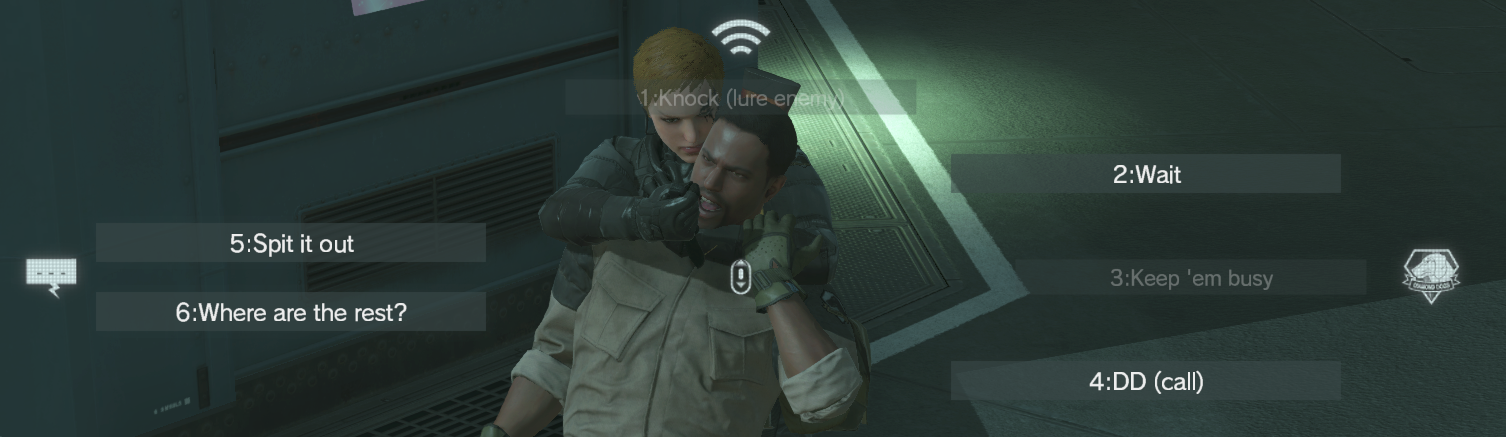
Almost every game that lets you take people out lethally or non-lethally presents it as a choice between pragmatism and ethics: killing is easier, but tranqing is nicer. That’s true in MGS V too, but it adds something else to that choice that solves a problem I’ve had with these games for ages. Continued