TOM FRANCIS
REGRETS THIS ALREADY
Hello! I'm Tom. I'm a game designer, writer, and programmer on Gunpoint, Heat Signature, and Tactical Breach Wizards. Here's some more info on all the games I've worked on, here are the videos I make on YouTube, and here are two short stories I wrote for the Machine of Death collections.
Theme
By me. Uses Adaptive Images by Matt Wilcox.
Search
What Works And Why: Prey’s Intro
The start of Prey is one of very few narrative-based game intros that really worked for me. And it comes not that long after one in the same genre that especially didn’t: Mankind Divided. So I thought it might be interesting to replay both and compare what works and what doesn’t. Not to pick on Mankind Divided – I loved the game after the stumbling start – but just because you can be more specific with praise if you have something to contrast it against.
I talked through my thoughts on both intros as I replayed them in the videos here, and I’ll summarise and add some conclusions through the magic of text. Obviously both parts of this post spoil the intros to these games. Continued
Rewarding Creative Play Styles In Hitman
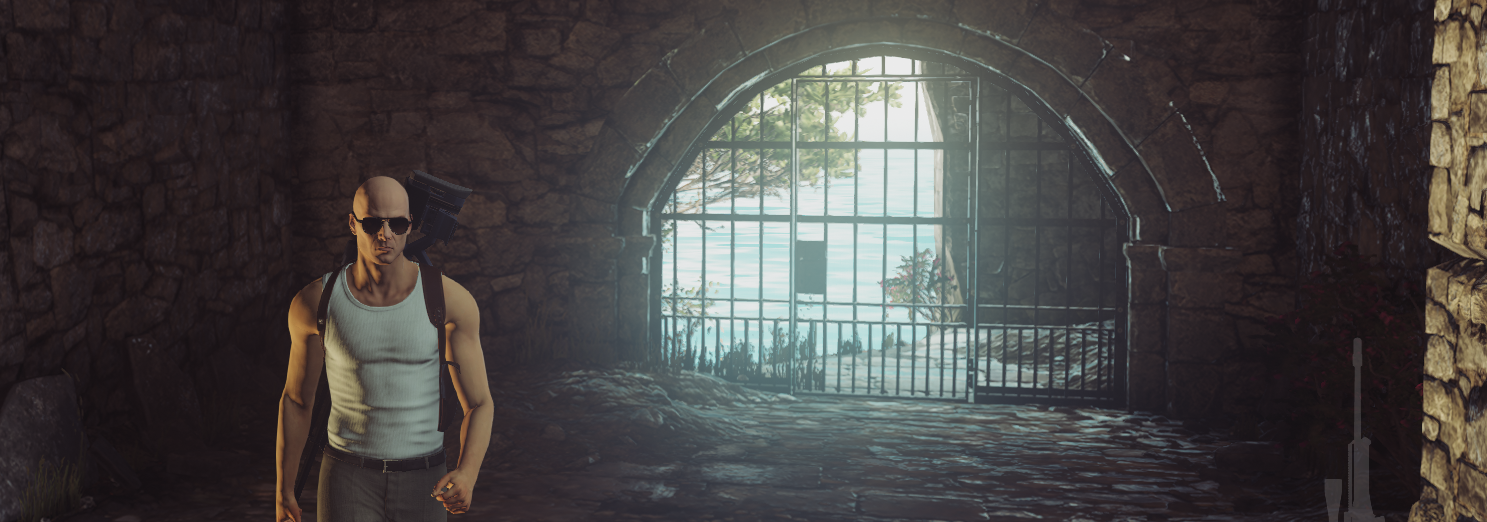
They’re releasing the new Hitman game bit by bit: one mission a month, set in a new and sprawling location. Good Hitman missions have always been replayable, but this time the whole game is built around it: a Challenges list tells you of the dozens of different ways to take out the target, an Opportunities system highlights little tricks they’ve designed to let you get the target alone, and a Contracts system lets players challenge each other to take out other targets in particular ways.
And it’s great. It takes a bit of getting used to: the levels are much higher security than Blood Money’s, so you pretty much have to use the Opportunities provided to get your targets alone, but there’s still lots of scope to mix that in to your own evil plans, and the levels are so much bigger, richer, and more complex.
But each of the big systems I mentioned does have some shortcomings, and their strengths suggest an even better way to embrace what makes replaying Hitman missions so enduringly fun. So first off, here’s where I think they fall a little short: Continued
Solving XCOM’s Snowball Problem
What’s snowballing? In XCOM, if your troops survive the mission, they get stronger, tougher and get more abilities, which makes them more likely to survive future missions and get tougher still. If they die, they’re replaced by vulnerable, weak rookies, who are likely to die and be replaced by vulnerable, weak rookies.
If you’re finding the game easy, it gets easier. If you’re finding the game hard, it gets harder.
That’s bad. And it’s not just theory-crafting, that’s exactly how my XCOM 2 campaign played out: early on we got crushed repeatedly, then a few lucky missions got us off the ground, and after that my people became almost unstoppable for 35 missions straight – even after I upped the game difficulty.
Any game with persistent resources will have some snowbally tendencies: success has to get you something, or failure has to cost you something, otherwise it’s not really persistent. And some parts of XCOM’s snowballing are too good to lose: unlocking cool abilities for my favourite troops is why I play XCOM.
So you can’t scrap that, but what could you do? Here are some ideas. Continued
Games I Don’t Plan To Make: Relativity Paramedic
I forgot part of the plan for this: your near-lightspeed space ambulance would also be indestructible and have perfect inertial dampening. So to decelerate, you just try to crash into all the debris you were trying to avoid as you picked up speed. So it’d go:
- Accelerate away from planet – dodge debris!
- When you’ve gone far enough fast enough, decelerate – hit debris!
- Turn around.
- Accelerate towards planet – dodge debris!
- Crash into planet!
What Makes Games Good
A few times lately, non-gaming friends and relatives have asked me: what’s the appeal of games? Good question! The people who don’t ask it seem to assume it’s something terrible, like bloodlust, or it’s some unknowable new drug they will never understand. Continued
Making Nuclear War More Interesting In SupCom 2
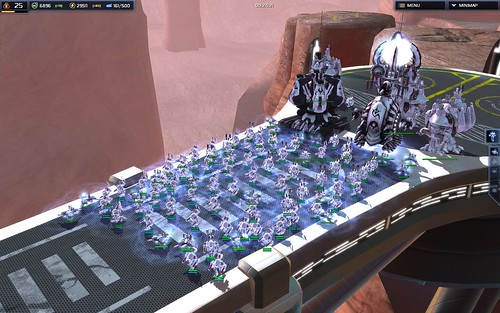
The notable thing about Supreme Commander was that it let you march a thousand robots around a 640,000 sq km battlefield – more like a county, actually. Supreme Commander 2 doesn’t let you do that, so the initial reaction is ‘Oh.’ But it’s still leagues ahead of every comparable strategy game in scale, control, and stompiness of robots.

The upside of all the scalebacks is primarily speed. It doesn’t really matter whether you pay for the stuff you build gradually (SupCom) or upfront (SupCom2). SupCom2 cuts out the interminable upgrading process to spectacularly accelerate how quickly you can build something vast, gleaming and capable of a war crime. It’s a less remarkable game, but a much more playable one. And even though its matches unfold eight times faster, I’ve already sunk more hours into it than the first.
A few things stop it from completely replacing the first game, most prominently the scale. A few things stop it from being the perfect evolution of the real-time strategy; a few signs of timidity in the Research options. And a few things stop me from really wanting to play it online with strangers – it appeals more than any other RTS in that way, but I still have to customise it a little to be happy with the playing field. So I wrote a few posts about how to fix all these things.
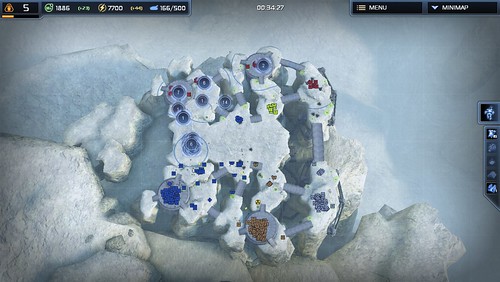
Some of the basic stuff probably isn’t controversial: it needs more eight player maps, two or three ten player ones, more sea maps, and more sea in the sea maps. AI that doesn’t build more transports than it can fill, and a ‘Very Hard’ AI that builds Experimentals with near-perfect efficiency. And a visible build queue, so that things don’t have to be paid for until they start construction, you can see what’s going to drain your resources, tasks can be reordered, and repeat-building factories can start churning out units again when nothing else is sapping your resources.

The Research tree of upgrades you can unlock is a wonderful improvement over the usual nonsense, but they’ve needlessly lost that concept of truly elite units. Experimentals are a different kind of “Fuck you” to the classic “Fuck you, one of my tanks can kill ten of yours.”
Upgrades should be more specific, more significant and more visible. The five incremental ‘Training’ upgrades should be cut to two very expensive ones that each double the units’ effectiveness, and make them physically bigger. It has to be immediately obvious “Shit, that’s an upgraded tank” or “Holy shit, that’s a maxed-out tank”. It should also be different for each race: UEF’s should upgrade health more than damage, Cybran damage more than health, Illuminate damage, health and range.
And scrap all generic ‘damage’, ‘health’ or ‘rate of fire’ upgrades – that’s what Training’s for. They should be replaced by unit-specific upgrades that change their form, size and function more dramatically. So instead of “+30% damage to all turrets” you’d have “Anti-air turrets upgraded to surface-to-air missile launchers, increasing their range and damage and letting them lock on to fast aircraft.”
Every upgrade needs to make a visual difference that’s obvious from any zoom level where you can see the model. Training increases size, a new weapon type changes the shape of the unit and adds an effect, regen causes them to spark colourfully when healing, etc.

This has been a huge problem for me in both games. Because it’s nuclear war, but it’s boring. Either side can build a nuclear missile, but either side can also build an anti-nuclear missile for half the price. The only reason not to is that half the price of a nuke is still significant. So an actual nuclear war is just a contest of who can be bothered to click their button the most, and since the defender has an economic advantage, it’s almost always him. The only time nukes actually get used is when your opponent is too new, stupid or artificial to know to build anti-nukes. Top marks for matching reality, zero marks for fun.
The only good moments we’ve had with them have been when, in co-op, a stupid AI has built their only nuke defense on the fringe of their base. One player readies a nuke, the others send in a combined strike team to take out the defense silo, and the moment they’re successful, you launch. Awesome. But in normal play, a strike force capable of taking down a massively tough nuke defense silo in the middle of the enemy base is also a strike force capable of taking down the base itself. Here’s my proposal:
All factions should be able to build a basic Nuke Defense silo without having to research or unlock it. It has unlimited anti-nukes, but it can only fire one at a time, and they don’t neutralise the nuke: they detonate it. So to avoid just blowing yourself up in a slightly different way, you have to build it well outside your base, and defend it with stuff you can afford to lose or move. The silo itself is nuke-proof – it’s basically a bunker – so you don’t have to rebuild it each time.
The idea is to turn nuclear war into a fight, rather than who can be bothered to click more times. It’s easy to defend against nukes, but only if you can defend a forward position in regular combat. Accordingly, it’s harder to nuke someone if all you do is sit back and nuke, but it’s easier to take out nuke defense if you build a good strike force and use it well.
It also gets you thinking about which directions nukes can come from, and which directions you could launch yours from.

Not strictly necessary, but it’d also be nice if each race had a unique second way of delivering a nuke. Each would bypass nuke defense, but be counterable by conventional units: again, more of a fight than a discrete “I clicked more times” system.
UEF build a Nuclear Bomber that must get close to its target intact to drop its payload. Anti-air can take it out quickly, and the nuke won’t detonate, so advance forces need to take out most AA defenses.
Cybran have a Walking Nuke experimental: a huge, tough block on legs with no weaponry, but which explodes with nuclear force on death. You’ll want to escort it in to give it enough protection to survive, then abandon it so your own units aren’t caught in the blast.
The Illuminate can unlock an upgrade for the Space Temple that lets them fire a nuke into it to hit the teleport destination. But the marker has to be in place for thirty seconds, and the enemy can destroy it in that time if they have the firepower. It’s a test of their base’s defenses, so if you strike while their army’s on their way to you, you’ve got a better chance of delivery.

This has always been a personal crusade of mine – I hate fog of war. It doesn’t meaningfully represent any real element of war, since regular line of sight would cover the whole battlefield on almost any map, and in any game set in modern times or later, dozens of other intel methods would give a clear picture of the scenario. But more importantly, it hurts the game in so many ways. Its crimes:
- Making the whole game look dingy and claustrophobic
- Wasting years of work on beautiful unit models by replacing them with grey squares
- Mandating endless, arduous scouting with air units – all the less welcome in a game where Air is supposed to be one of many options rather than a mandatory tool
- Robbing you of the satisfation of seeing artillery smash an enemy base. It doesn’t even compensate you with the luxury of an icon vanishing if you don’t have realtime radar coverage.
The argument in favour, as I understand it, is to let you surprise the enemy by building something he doesn’t know is coming. If that works, it reduces the game to scissor/paper/stone – complete luck. If you can see what’s being built, you have time to adapt your strategy to include a counter, and so does the enemy. To me, that’s where strategy gets interesting.

I think the tricky element can be achieved in a more explicit and localised way: each faction should have their own method of deception.
UEF can unlock a decoy engineer: everything he builds is a cheap fake that looks real to the enemy. It fits their defensive nature by making them look bigger than they are, and leads to feints like building masses of real point defense, then letting the enemy catch you building a fake one to tempt him into a doomed rush.
Cybrans have a very high-tier Land upgrade to turn the Adaptor mobile shield opaque to the enemy, so they can cluster these to conceal land units. Stealth is broken when it takes just a few hits, though, and doesn’t regenerate when the shield does.
Illuminate can Research an upgrade that makes all their experimentals appear to the enemy as regular units of a similar type, only revealing their true form and power when attacked. They already have a deceptive edge in that their Experimental factory is the same for all types of Experimental, so you can’t tell what they’re planning to build.
I also had some ideas for how a high-level campaign map could work for the single-player, and a redesign of the Illuminate to make them feel less toothless. But those are probably separate posts.
An Idea For A Better Open World Game
The last post was figuring out what we all like in open world games; this one’s about how to make that stuff work together. Can you include it all in one game, and still avoid theme-park silliness and repetitive grinding? No, probably not, but the ideas that crop up when you try are interesting. Continued
Open World Games: What Works And Why
It felt like last year open world games took over, and stopped being high-budget exceptions to the norm. It’s now pretty commonplace for a game’s linear story to be just the main attraction in a fairground of challenges, collectibles and distractions. ‘Go anywhere, do anything’ games have been around since the eighties, but it’s only in recent years developers have figured out the hooks, tricks and bribes to get a wider audience playing them.
Most of them kinda suck though, don’t they? Not the games themselves, necessarily, but their approaches to filling these sprawling open spaces with stuff to entertain you. They know how to make a traditional game, and they know how to make an open world, but their attempts to fit the two together amount to mashing a square peg into a round hole until it splinters.
I’m interested in whether there’s a way to take the most successful of these systems and make them work with the world, and each other. To fit with the fiction rather than jar with it, and to draw attention to the world rather than distract from it.
So ignoring how much we like them as games for a moment, what do some of the better open worlds fill their lands with, and how well does it work?
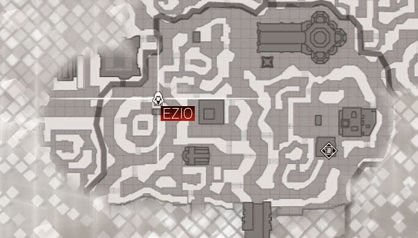
Assassin’s Creed 2:
- Series of story missions that lead you through each new city
- Scattered mini-missions that conform to one of a few templates (contracts, courier, etc)
- Informal missions like chasing any thieves you see
- Isolated unique puzzle/platform levels
- Collectibles, some of which assemble to shed light on the plot
The broad variety means there’s always something you feel like doing, and most of it is integrated into the fiction – albeit by clumsily grafting two different fictions together. The informal missions feel like fun because no-one tells you to do them, and failing is no big deal. The puzzle/platform levels are usually welcome because you know what you’re getting into when you take one on.
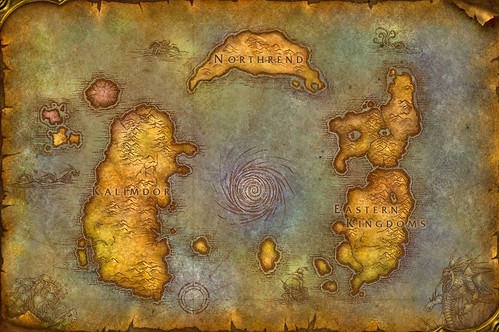
World of Warcraft:
- Miscellaneous quests
- Large scale co-op dungeons
- Resource nodes
- PvP arenas
It’s nice that there’s stuff to do wherever you go, but the lack of a main quest and presence of other players doing the same ones makes it hard to feel like what you’re doing matters.

Fallout 3:
- Series of story quests
- Character-driven sidequests without obvious rewards
- Occasional unique locations, people and loot (Oasis, Dogmeat, Alien Blaster)
The density of hand-scripted missions to find is enough that exploring is always appealing, and the unique stuff is rare enough to feel special, but common enough that everyone finds some of it. The main story has its moments, but your motivation for it is disastrously weak.
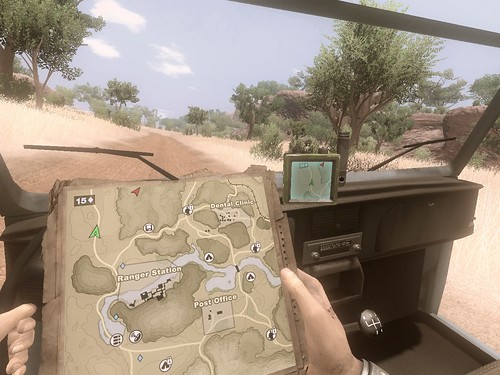
Far Cry 2:
- Two main story mission threads that sometimes merge
- Optional extra objectives to those missions with little reward
- Template mini-missions: convoys, assassinations
- A set of FedEx missions you have to keep doing to stay alive
- Trickily placed collectibles with a material reward
The main missions feel annoyingly disconnected from your objective, and the choice between them is illusory. The template missions are excellent because the templates themselves are compelling, but they never feel like more than that. The thoughtful placement of collectibles makes them much more fun to hunt, even if you don’t need the money.
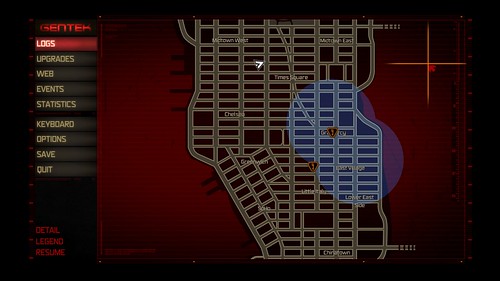
Prototype:
- Series of story missions that change the city from peaceful to wartorn
- Fairground-style challenges
- Collectibles and destroyables that grant XP
The story missions are mostly bad, and the challenges are ridiculously divorced from the fiction. The changing city would be cool if you could make any of it yours, but instead the only influence you have is deciding which of two factions that hate you control certain bits.
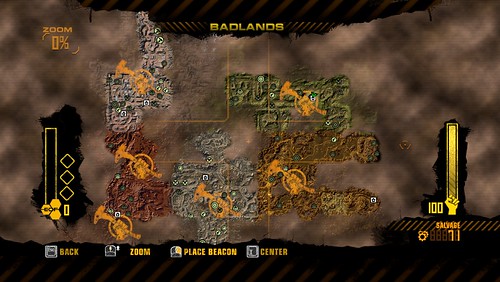
Red Faction Guerilla:
- Series of story missions that conquer each area, making it safe and unlocking new one
- Template mini-missions: hostage rescues, defenses
- Fairground style challenges
The mini-missions do a good job of providing a choice of fun stuff to do without breaking fiction. The fact that the story moves on from each area, though, makes it feel less like a world and more like levels.
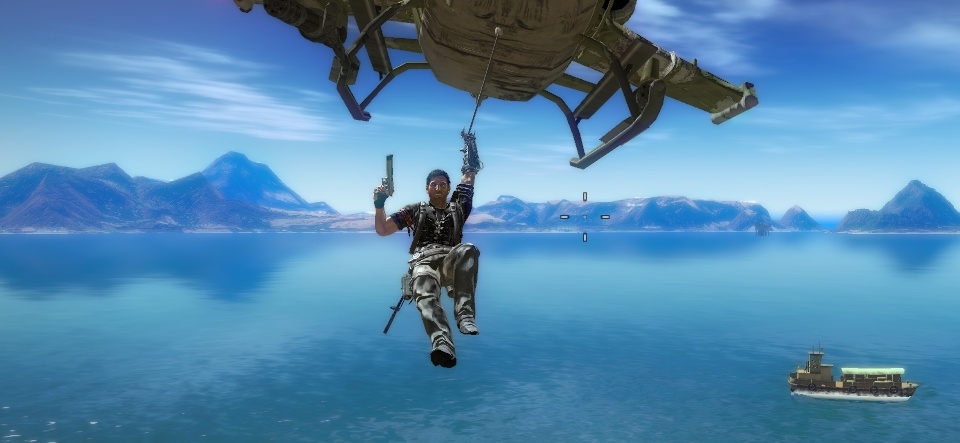
Just Cause:
- Series of story missions
- Scattered identical mini-missions to take over settlements
- Template mini-missions
- Collectibles
Since the mini-missions keep you in a small area and are very similar to play, they don’t offer much of a break. Neither do they or the collectibles carry an appealing reward.
It seems like the things that work best, or are most needed, are:
- Informal missions – opportunities you spot rather than jobs you’re ordered to do
- Collectibles that improve you, in places it’s fun to visit
- Categorised missions, so you can choose what kind of job you want to take on next
- Scraps of story scattered about to make your adventure feel meaningful
- Unique things you can find, take and use
- The ability to change or add to some part of the world
- Variety – at every stage you should have more than two meaningfully different options for fun things to do next
Any additions? Anything you really like in open world games in general, or a specific one? The next post will be figuring out how to cram all the good stuff into one specific open world.
What’s Wrong With Team Fortress 2’s Unlocks
I cooed a little about the amount of free stuff Valve have added to TF2 since release, but it’s not purely to fix or improve the classes. They’ve been experimenting with ways to leverage this free content to add an element of persistent progress and character customisation to TF2. But their experiments have been weird, and so far the resulting system doesn’t really do its job. If you’re all too familiar with why the current system needs changing, you can just skip to how I suggest changing it. Here’s what’s wrong:
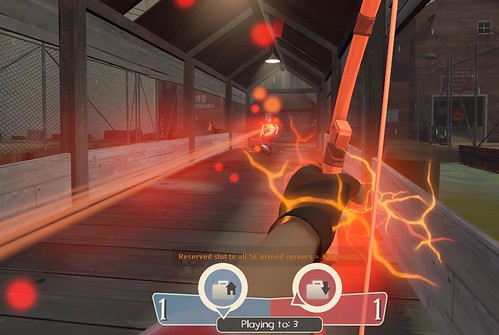
You can unlock weapons for a class by earning its achievements. That means everyone plays the same class when its new weapons are released, even before they’ve earned any of them. We’re bribed to play that class at the very time when TF2’s primary problem is inevitably going to be too many people playing that class. And we’re often bribed to play it in counter-productive ways to fulfill achievement criteria, some of which are just fun little jokes.
You can ‘find’ weapons and hats randomly. On the plus side, that sometimes gives you a weapon for a class you don’t normally play, encouraging you to try it out. On the down side, well:
- A lot of what you find is duplicates of what you already have, which means that little gold message comes to be associated more with disappointment and absurdity than excitement or pleasure.
- People’s fortunes vary wildly without any correlation to skill. Some people play for hours a night, rarely get a weapon, find only dupes, and have never seen a hat in hundreds of hours of play. Others consistently get unlocks every half hour or so, and have copious hats for classes they don’t even play.
- Consequently, very rare and exclusive class items like hats don’t signify anything when you see a player wearing them. What does the mighty Camera Beard tell you about a Spy? Nothing, he just got lucky.
You can ‘craft’ items by combining lots you have to produce one you might not. Presumably meant to tackle the dupes problem with the random drops, but what we understand of the current system is totally bizarre. If you don’t have the Eyelander, you seem to need six copies of the other two Demoman weapons, plus at least eight melee weapons, to craft one without losing anything you need. In a given time period, you’re about 13.8 billion times more likely to just find an Eyelander than what you need to make one.
For a hat, you’d have to find eighty-one weapons you don’t need just to make a random one. To have more than a 3.4% chance of crafting the one you want, it takes a hundred and twelve. At the end of which, you’ve got something a new player might find in his first hour with the game.

That’s what’s wrong with the current system. I think it needs a few changes to work as an addictive RPG, as a way of customising your characters to your tastes, and as a way of showing off your skill or dedication in the way you dress. The unlocks system ought to make the repetitive violence feel like part of a larger goal, and give you a sense of progress even if you lose. Here’s how I’d do it:
Unlockable Weapons: You’d be able to browse these from the main menu to see what’s available, and select one you want to unlock. Each requires somewhere between 250 and 500 points, and once you select it all the points you score in-game, as any class, count towards that. That’s about 2-4 hours play – the Flare Gun might be 250, the Direct Hit 500. You need to be in a game with at least four non-idle players or bots for your points to count, but beyond that anti-exploit measures are probably futile.
On top of that, every five hours or so you’ll get a random weapon unlock that you don’t already have. If it’s the one you’re working towards, points earned so far transfer to what you pick next.
The idea: Every match gets you closer to something you really want, and the items you choose first make you a different player to those around you. At the same time, you can still get something unexpected for a class you don’t normally play that might encourage you to try them.
Achievements: I think they should stay – I even think the silly ones should stay. In fact, I’d get rid of the sensible ones, and just leave the ridiculous accomplishments – taunt kills, ironic deaths, corpse dancing and tortured puns (Slammy Slayvis Woundya? That’s what you’re going with?). But they no longer earn you weapons, they’re just an acknowledgement for any time you do something remarkable.
The idea: Silliness absolutely has a place in TF2, and trying to get things like taunt kill achievements just makes the game hilarious for you and your enemies. But no-one should be bribed to go for them if they don’t want to.
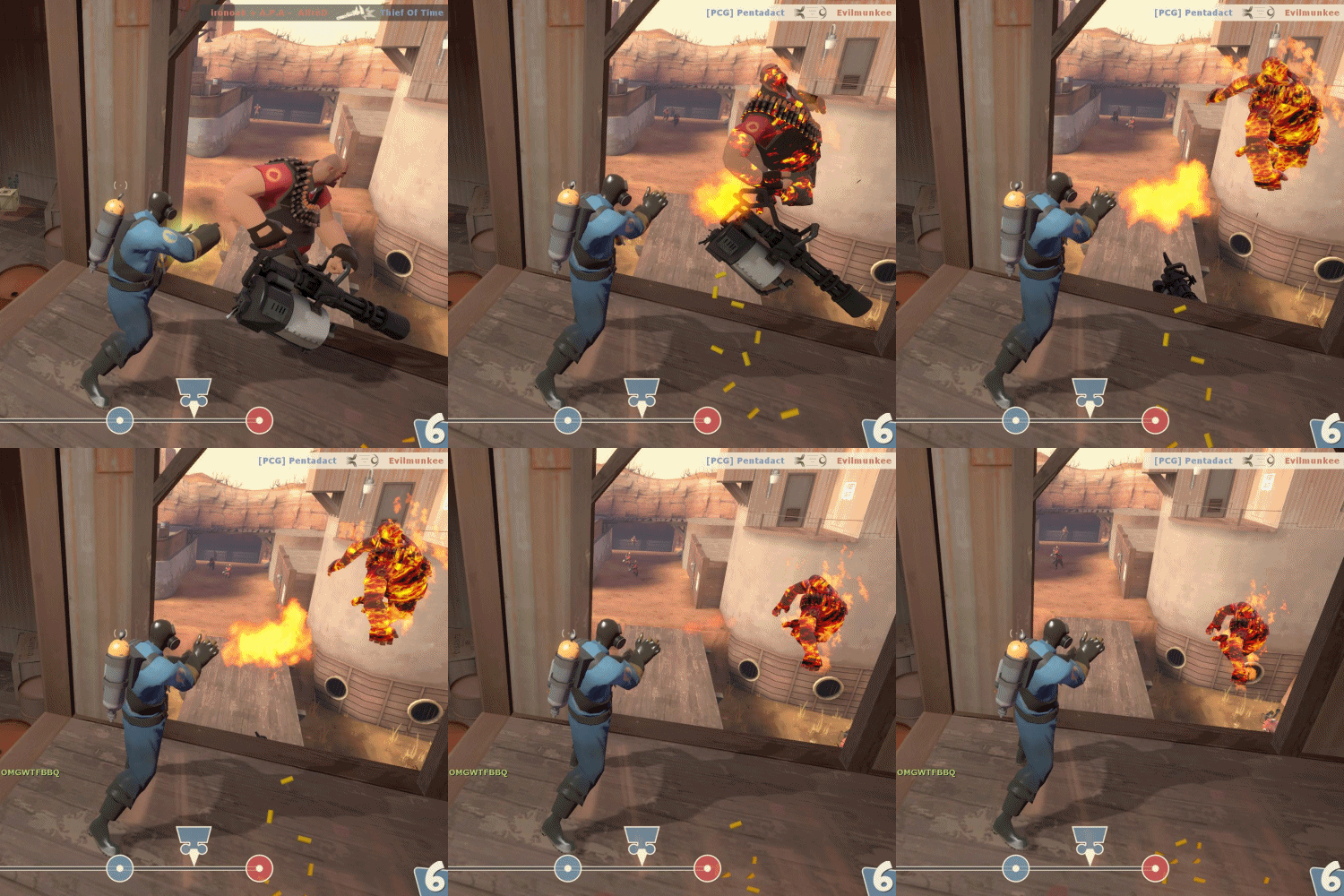
Feats: This is where the sensible achievements would go. They’re things that genuinely benefit your team, so you’re rewarded each time you do them: some bonus points towards your unlock (but not your in-game score) and a little pop-up: “Medic Feat! Extinguished five team-mates, +2 points”. Things like multi-kills, capturing a point alone, setting light to a cloaked Spy, killing a fully charged Medic, or making the winning capture would always be rewarded.
The idea: By letting people know they’ll be rewarded every time they do this, it both teaches and incentivises intelligent play. Achievements already do this a little, but not reliably: plenty of the actions they suggest are actually pretty dumb.
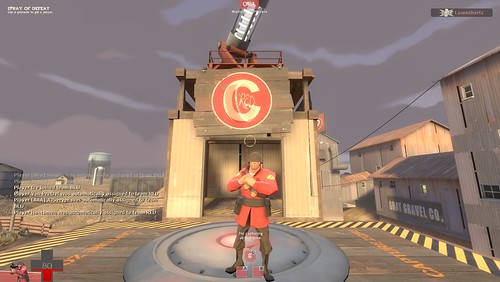
Unlockable Hats: These are handled separately, but again you choose which you want to unlock. When you do, only points and feats earned as that specific class count towards it, and the number required is in the thousands – twenty hours’ play for most, more for some special prestige items. You still earn points towards your weapon unlock at the same time.
The idea: A hat says “I play this class, I play it well and I play it a lot”. A Camera Beard says “I am amazing or crazy.”
Crafting: No crafting. I don’t think the system is entirely unsalvagable, and Chris Livingston does a good job of salvaging it in a much shorter post than mine. But ultimately any full crafting system hinges on finding dupes, which I think ruins the “ooh, I found something!” moment by diluting it with disappointment.
![[FBP] Dirty Squirrel is looking good!_0002](http://farm5.static.flickr.com/4052/4207772952_4a98696b4d.jpg)
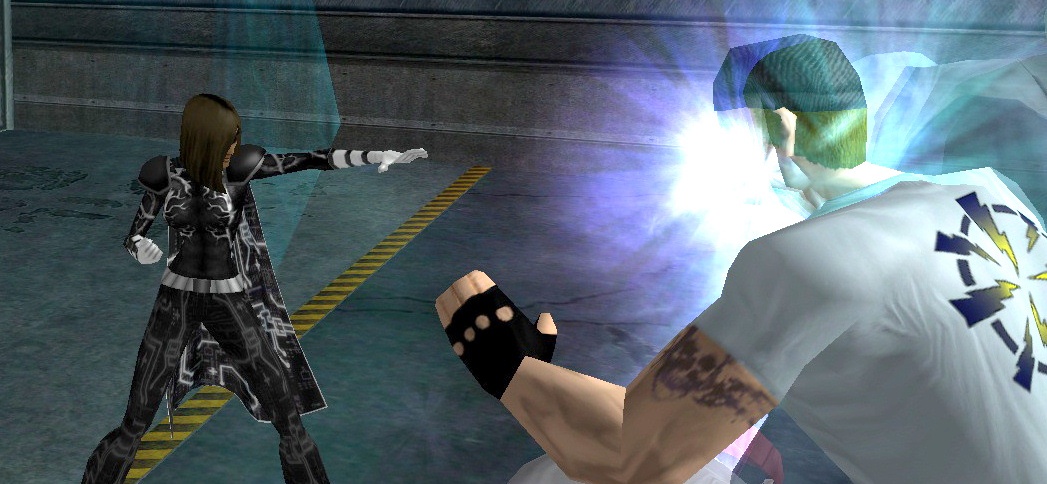
A Different Way To Level Up
Levelling up is pretty much the heart of RPGs, because it does these cool things:
- Makes you feel like you’re achieving something by playing.
- Gives you new abilities to try at well-paced intervals.
- Lets you enjoy feeling more powerful than you used to be.
All this makes repetitive tasks feel worthwhile and even fun, which is particularly useful in a massively multiplayer game, because you don’t want players to get through all your content quickly, get bored and stop paying you a monthly fee. Continued
Abandoning The Main Quest In Oblivion
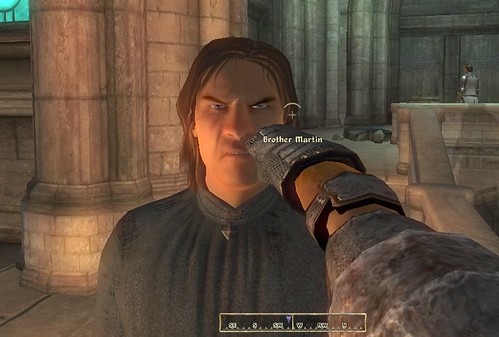
Oblivion’s main quest wasn’t unusually long, bad, or difficult, but it’s rare to actually find someone who bothered with it. The overbearing waffle of the introduction didn’t help, but I think it’s mostly that we just don’t want a single, long main questline in open world games. A primary story that’s the same for every player sits awkwardly in a game about freedom and customisation, and Oblivion’s sits more awkwardly still if you attempt it as the wrong class or at the wrong level.
You could have no main quest, but that might feel aimless or trivial. Even if we don’t do it, the existence of a main quest gives purpose to the world.
So what if the main quest was split up and woven into the guild questlines? People actually do those, because you can pick one that makes sense for your character and suits your style of play. In the case of Oblivion’s demons-invade main plot, each questline could have three key missions where the guild business brings you into contact with the invasion:
- One in which you first discover the demons in the course of your work.
- One in which the escalating invasion directly affects the guild and becomes a priority.
- One in which you find and kill a Daedric Prince and end the invasion.
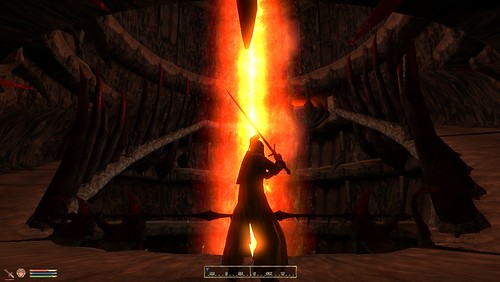
Luckily, the guild questlines are already structured into three neat groups of quests. These special missions could come between each group, like this:
Fighter’s Guild
- Five quests for Burz gro-Khash in Cheydinhal.
- Main Quest 1: you’re hired to investigate the disappearence of a small expedition of travellers. You find them all slaughtered, and follow the trail of blood to encounter a single Dremora, who you kill. The guild are disturbed, but want more info.
- Five quests for Azzan in Anvil.
- Main Quest 2: a portal opens near Chorrol, and the overwhelmed city guard enlist the Fighter’s Guild to help their defense. In the aftermath of the battle, the Blackwood Company move in and exploit the lack of Imperial presence to take over the town and extort its citizens.
- Five quests for Modryn Oreyn in Chorrol against the Blackwood Company, culminating in their termination.
- Main Quest 3: a portal opens outside the Imperial City and you, as guildmaster of the Fighters’ Guild, are called to deal with it. You lead a team of the key guild characters through to face a Daedric Prince. It’s almost impervious to your attacks, but Modryn has brought some confiscated Blackwood Company Hist Sap for you as a last resort. Drugged up, you’re strong enough to kill it and end the invasion.
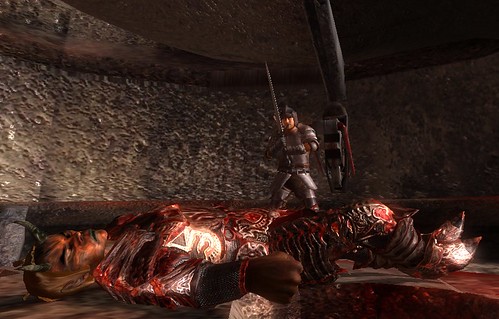
If you haven’t got far enough in any other guild questlines at that point to have encountered invasions during them, it’s not made clear to you at this point that you’ve only truly quelled a quarter of the demonic forces about to break through to this realm.
Once you have, you’re sent to see Raminus Polus at the Arcane University who explains their mystic types had feared as much: that the prince you vanquished was one of many. From there, the other guild questlines would unfold as if they were your first, each woven into a demon invasion of a different part of Cyrodiil, each of which is ultimately stopped in a style befitting that guild’s unique talents. It’s a bit redundant to say things like that in vague terms, so specifically:
Thieves’ Guild
- Four quests for Armande Christophe in the Imperial City.
- Main Quest 1: a wealthy home is found half-destroyed, its valuables ripe for the picking. During your escape, you brush witht he daedric forces that destroyed it.
- Three quests for S’Krivva in Bravil.
- Main Quest 2: creatures start appearing near Anvil, a prelude to a portal opening. You have to get Hieronymus Lex and his best guards reassigned to that city to better protect it. (This is the same as S’Krivva’s fourth quest, only the context and motive are different.)
- Four quests for the Gray Fox, gathering esoteric artifacts to use in the theft of an Elder Scroll.
- Main Quest 3: The Scroll details how to close an Oblivion portal, but the Empire were refusing to consult because it involves dark magic. The method requires a filled Black Soul Gem to be brought to the heart of the Oblivion plane, so you have to locate and steal one, then sneak your way into hell itself to collapse that realm, killing the Daedric Prince inside.
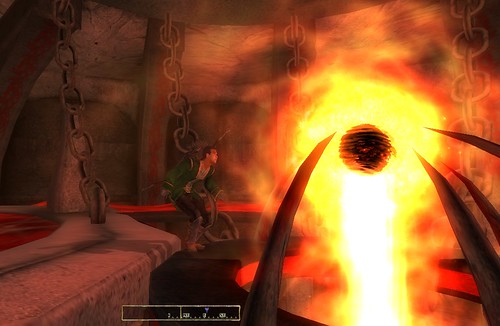
Mage’s Guild:
- Seven ‘recommendation’ quests.
- Main Quest 1: Your final recommendation quest involves a summoning spell that unexpectedly brings forth a Dremora. It slaughters a guild member before you can bring it down.
- Four quests for Raminus Polus.
- Main Quest 2: Your research for Raminus on Black Soul Gems suggest they might have caused the Dremora’s appearence. You’re tasked with replicating the event, which backfires and briefly sucks you into Oblivion.
- Seven quests for Hannibal Travern further investigating Black Soul Gems and Necromancy.
- Main Quest 3: The Necromancer King you kill at the end of Hannibal’s quests was responsible for the dimensional breach. You use his staff to intentionally summon a Daedra Prince to this realm and take him on, with your guildmates.
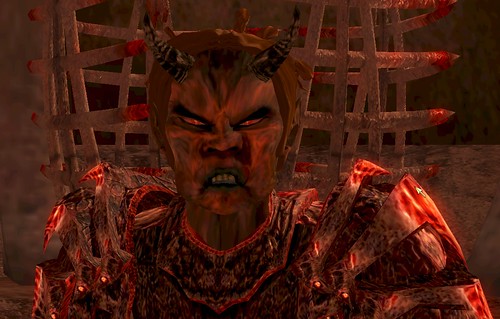
Dark Brotherhood:
- Four quests for Vicente Valtieri.
- Main Quest 1: an early target turns out to be a Mythic Dawn member, and Daedric creatures spill forth as he dies.
- Four quests for Ocheeva.
- Main Quest 2: Lucien believes the Mythic Dawn have infiltrated the Brotherhood, and charges you with rooting out their agent the only sure way, as in The Purification.
- Seven dead-drop quests after Lucien sends you into hiding.
- Main Quest 3: The Mythic Dawn agent is alive and has been tampering with your orders. When you’ve rooted him out, you’re made Listener and entrusted with what the agent was after: a perfect blade capable of slaying even a Daedric Prince. The Night Mother can transport you to his realm, but he can only be killed if caught unawares.
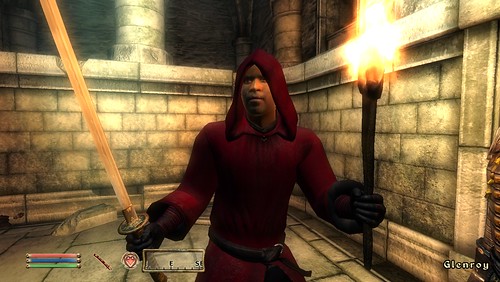
Dedicated players may ultimately do all four questlines, and a final Main Quest chunk ought to wrap them up and confer a final reward. But most people would probably play the same amount of Oblivion as they already do. The point is not to try to make players see more of the game’s content, but to turn missed content from a negative thing to a positive thing.
Right now it’s a negative thing because people get bored with the long linear quest, or struggle with it because it’s not for their class, or don’t want to do the standard thing. They don’t know how much they’re missing, and they feel indifferent or even guilty about missing it.
If it were split, the stuff you don’t end up playing is just paths not taken, and the more of them there are the more meaningful and personal your choice feels. Spending masses of time and money on content most players will never see is inevitable when making an open-world game. But if it’s structured in many strands rather than one long line, unplayed content can have a positive effect on even the players who don’t play it.
Prototype Revised
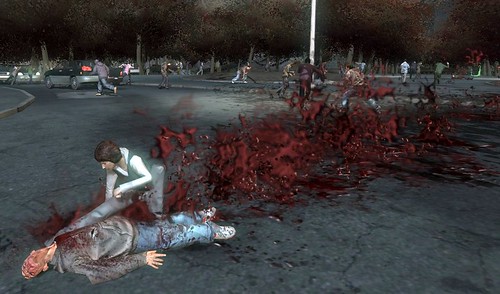
Prototype’s a game about having absurd powers – here I am surfing a man’s corpse – and you earn a steady stream of new ones until the end of the game. Those powers are what makes it fun. But the sheer number you have access to by the end of the game turns the controls into a finger-breakingly awkward mess of accidental stunts misfiring while you desperately will your hoodied twat to do what that combination of buttons used to or should do.
There’s also a redundant level of redundant redundancy: there are about seven powers that deal damage to everyone around you, and no reason to use any but the one that deals the most. The best powers are good against both large infected like Hunters and armoured vehicles like Tanks, and the only other type of enemy, crowds of zombies or soldiers, are never a threat. You fall into a pattern of using the most powerful for every situation, and your brain disengages.
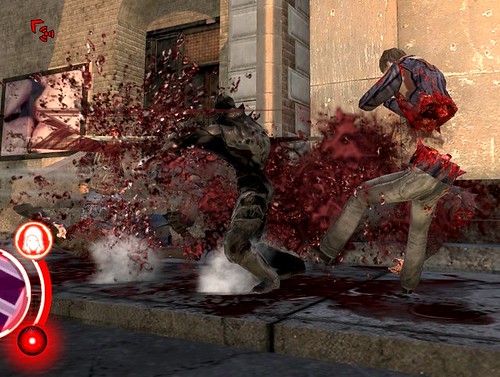
I’d trim the powers dramatically and give each set a narrower range of uses, so there’s a reason to switch between them. I’d also make each upgradable three times, so that you still have loads of options for what to spend your experience on.
I’d also want dangerous enemies among the crowds: military deathsquads with guns customised to seriously hurt you, and proto-zombies with claws like yours that really sting if they reach you in one piece. It’d give power sets one more thing to be good or bad at, and coupled with stronger differentiation could require that you actually think about which to use and upgrade. Here’s how it’d work:
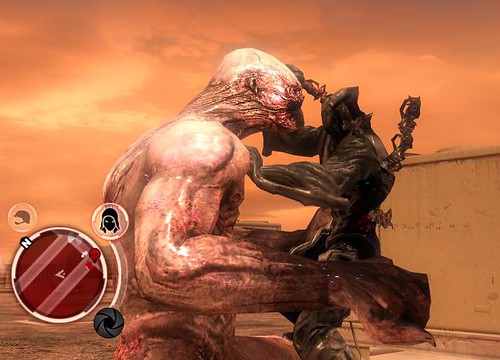
This power doesn’t let you do anything new, just increases the damage of all your basic combat moves. There’s no point in using it until you upgrade it to be more damaging than your proper powers, when it becomes so powerful that there’s no point in using anything else. In both cases, it poses no interesting decisions. I’d scrap it completely.
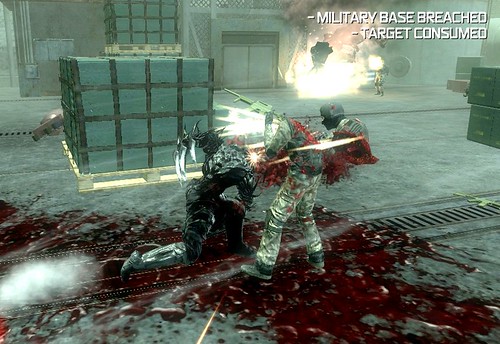
Primary attack: slash while running. Lets you plough through crowds hardly breaking pace, is okay against Hunters, bad against tanks. Upgrades increase the speed you move while attacking, up to full sprint.
Secondary attack: digs one hand into the ground to stop dead and swing the round in a wide arc, doing damage proportional to your speed when used. Decent against everything.
Jumping attack: lunges claws-first at a target, skewering fleshy ones or latching onto vehicles for a hijack. Upgades increase how far you can lunge.
Currently, since claws are less damaging and no faster than other powers, they’re just flat out worse. I’d make this the only mode in which you can pick up and throw large objects. Picking up the wrong thing is the number 2 cause of death among prototypes, a recent study revealed, so assigning one mode to be the chuck-stuff mode means you’re never going to grab a taxi instead of an army sergeant in any other mode. In a similar vein, you should be able to pick up weapons in any power mode, only when you’re a normal human.
The previous Claws secondary attack was cool but had little to do with claws – I’d keep it as a Devastator move instead.
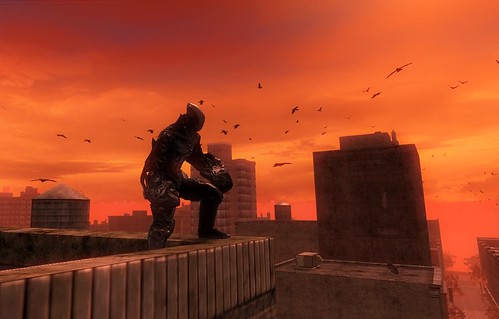
Primary attack: pounds slowly directly ahead, no splash damage. Slow against crowds, okay against Hunters, great against tanks.
Secondary attack: flings yourself at targeted enemy rocky fist first, as in the Hammertoss. Upgrades increase damage and range.
Jumping attack: elbow drop, as current, damage increases with height.
The idea is that this mode should be all about flinging your enormous weight about, dropping on stuff and knocking choppers out of the air. Right now this is an anti-tank mode that’s not as good against tanks as Blade or Musclemass, and its star move is an elbow drop that’s not as good as the Musclemass Bullet Dive, so it’s utterly redundant.
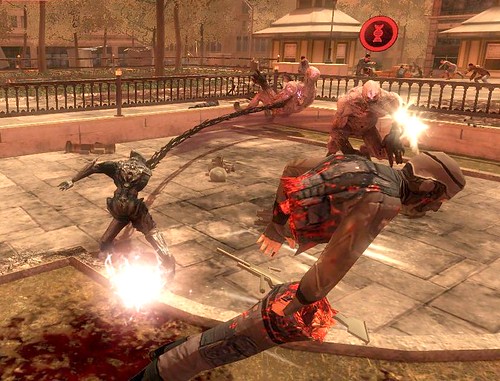
Primary attack: Whips ahead, killing things in a long but narrow cone. Meek against everything, but potentially hits more stuff at once. Upgrades increase length of whip and hence size of cone.
Secondary attack: pulls a single target towards you and puts your fist through them. Upgrades increase pulling force: down a chopper or skewer a Hunter at level 3.
Jumping attack: swings your whip arm down beneath you like a giant deadly skipping rope, batting everything beneath away. Upgrades increase the area it covers.
This mode would still be for when you’re concentrating on a specific target, whether to hijack it, eliminate it quickly or keep damaging it while staying away from it.
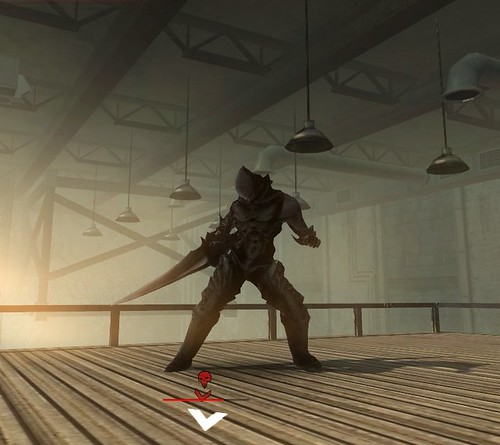
Primary attack: slashes and moves forwards at a decent rate. Okay for crowds, great for Hunters, not great for tanks. Upgrades increase speed.
Secondary attack: dashes forwards with blade vertical, splitting anyone in your way. Upgrades increase how far this dash takes you.
Jumping attack: as current.
The only trouble with Blade as it stands is that it’s great against tanks too, which makes everything else except Musclemass obsolete. And Musclemass makes Blade obsolete.
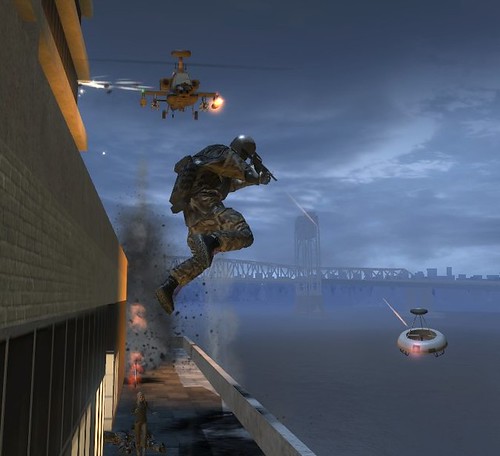
All moves scrapped except punch, kick, flying kick and bodysurf. Anything that doesn’t require a specific keypress can stay in as an automatic flourish. And as mentioned, this is now the only mode in which you can pick up and use weapons.
Useless, all scrapped for simplicity.
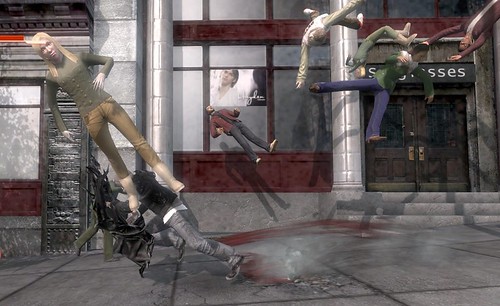
Shield: as current, but upgradable to increase the amount of damage it can take before breaking.
Dodge: new mode – automatically dashes you out of the way of incoming projectiles and blows. Upgrades increase how soon after dashing the power is ready to save you again.
Armour: as current, but upgradable to decrease the damage taken while wearing it.
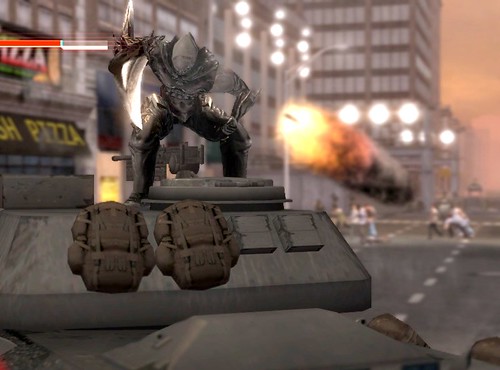
I like the current ones, but I’d like even more the ability to specialise, find cool combos of Defense and Offense powers, then upgrade the bejesus out of them.
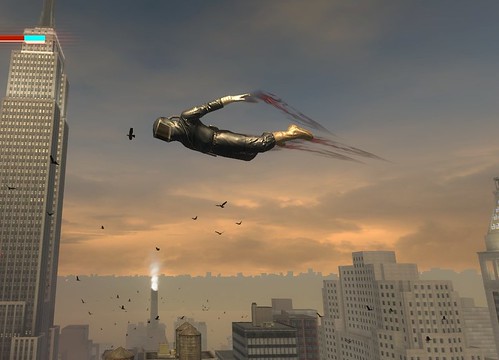
Free running is already fun, but it’s reliant on using this very artificial airdash that shoots you forwards in a not very physically convincing way. It also really hurts my fingers to do it a lot. I’d like it if, once you were airbourne, there was only one control:
Glide: press jump while airborne to toggle. All your velocity, downward and otherwise, is translated into forward velocity, letting you get enormous speeds by jumping from a great height and activating it at the last minute. Once gliding, you can angle it up to gain height and lose a bit of speed, or down to lose height and gain speed. The idea is to combine it with wall-runs along skyscrapers to gain height without losing speed, then spend that height on an extra boost by diving.
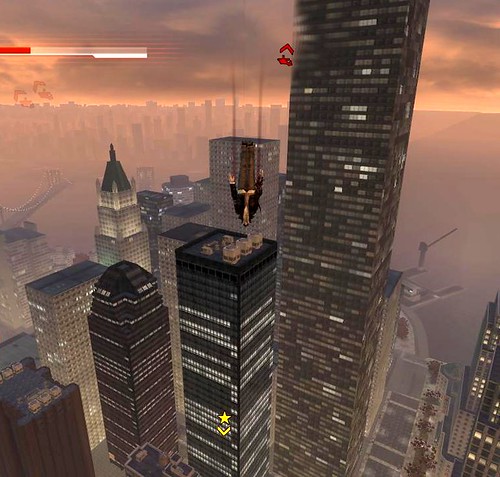
Currently, Prototype has over fifty distinct powers that require different button combinations. This would be a little over twenty, all told; none that require simultaneous button presses and none with overlapping controls. But the hope is that it’d make it a more complex game, because the fifty powers it currently has don’t have even twenty meaningfully diffrent uses – they have about six.
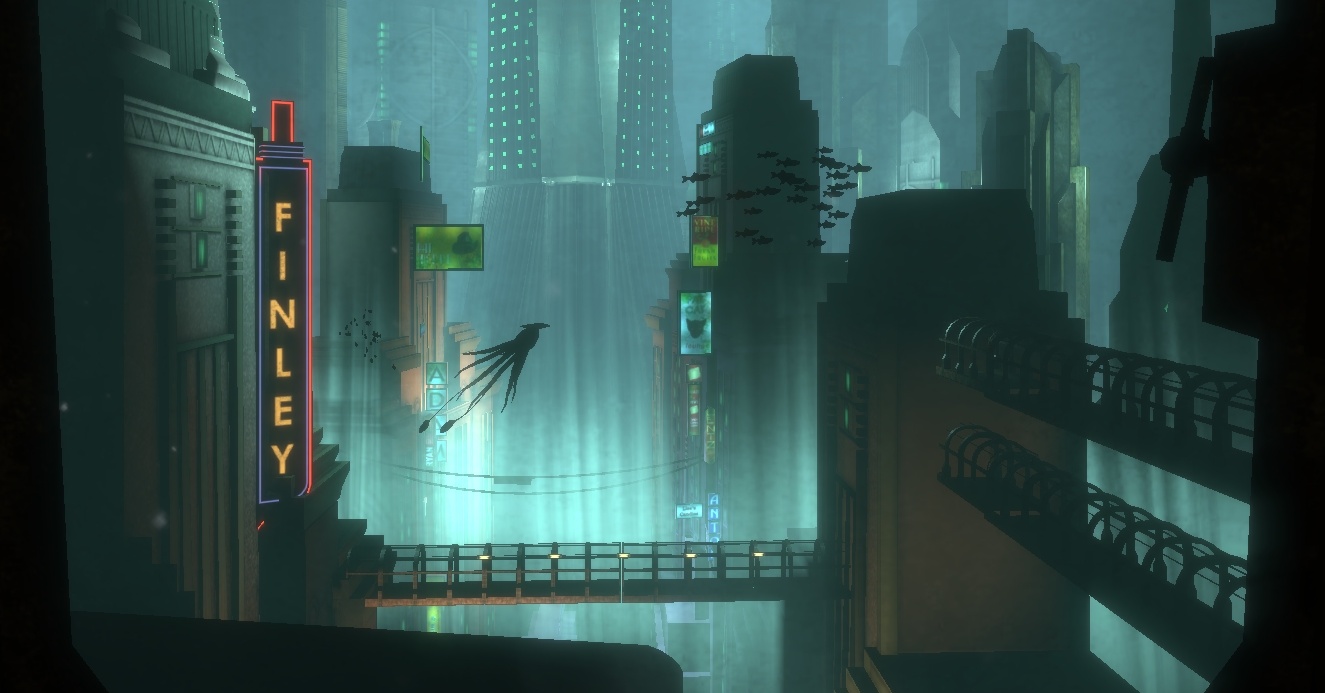
A Different Idea For Ending BioShock
BioShock Spoilers
This is my idea, in ten steps, for how BioShock could have unfolded after your encounter with Andrew Ryan in his office. It was written in 2009, but coming back to it in 2020, I feel like I should clarify a couple of things at the top:
- Although I did vaguely try to limit myself to stuff that’s not too outlandish, I actually have no idea what it’s like to make a game of this kind so I don’t claim my version is practical in scope.
- It obviously comes from dissatisfactions with BioShock’s actual ending, but I’m not imagining those were down to a lack of ideas. I know games are made under unseen constraints, triple-A games triply so. It’s very easy to sit back and do armchair game design, and it’s also very fun, and you also can’t stop me, so here we are.
Keeping The Peace In Mirror’s Edge
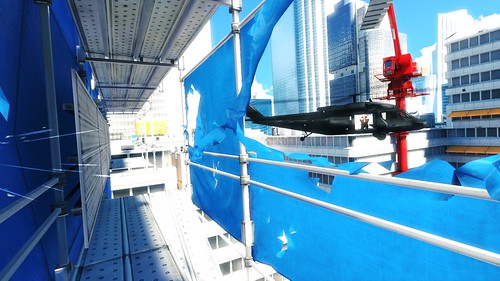
It turns out that if you start talking about Mirror’s Edge in the Future offices, pretty soon a small crowd gathers to weigh in. In a group of editors and writers – one who gave it nine out of ten and another who thinks five was too high – it turns out we mostly agree. We all love to run, and we all get angry when we’re stopped by something difficult.
Most of my suggestions for the combat with cops would make it less difficult, and hopefully less awkward. But it can’t get so easy that you don’t feel threatened, and the grander issue is that it needs to be more avoidable. So this is about that.
The police choppers already work well as a propulsive force for the chase sequences that doesn’t often lead to death or frustration. But I’d like to change each of the three types of ground enemies, and how they’re used.

Cops: Not allowed to fire until they’ve issued two verbal warnings (“Freeze!” – “Stop or I will shoot!”) giving you a window to take one out or escape. Obviously once you’ve attacked one, others in the area can open fire. When they do hit, damage is much more serious – two hits kill – but they’re still wildly inaccurate. It becomes more of a tactical puzzle about how not to get shot, and the way forward never depends on turning a slow valve, climbing a slow pipe or working out where to head.
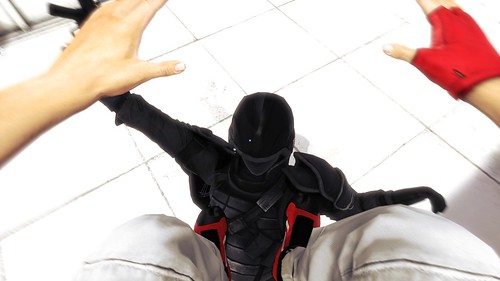
SWAT: Armoured and with two-handed weapons, these guys can’t be disarmed. But they’re only ever sent after you, so you never have to get past them to progress. They can be killed with stolen cop weapons, knocked out if you drop on them, or pushed into danger by a melee attack.
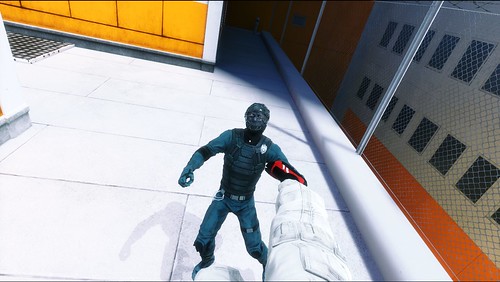
Chasers: Right now these guys have tazers, which are just kind of annoying. I think they should have mace. They should be knocked back by any melee move – to their death if they’re on a ledge – but if they get right up to you, they grab you and spray a blinding teargas in your eyes, sending your vision haywire and making you scream. You can try to flee while blinded, but if you don’t get away your third macing incapacitates you, and it’s game over.
Being chased was the perfect way to escalate Mirror’s Edge, but the Pursuit Cops are just so lame in combat; dancing about, tickling you with electricity and mild punching. I want to be freaking terrified of these guys. It would help if they didn’t look like dorks.

So one set is easy to deal with, another is hard to deal with but easy to avoid, and the last is hard to deal with or avoid – so do whichever you’re best at. I found lots of fun ways to lure Chasers into positions where I could knock them off a building, but bizarre rules meant that more often than not, I was the one knocked back by the crucial blow.
I was saying the other day that no matter how often the game explicitly tells you to stop and fight, the player still tries to run right past. Replaying the early sections at lunch today, I realised there’s actually a forced pop-up message in the prologue chapter that says “Always try to get away from enemies.” It couldn’t feel more like two different games that were code-merged at the last minute.
The Combat In Mirror’s Edge And Why It Fucking Sucks
Having played it through three times in English and once in Italian, it’s starting to look like I might be obsessed with Mirror’s Edge. This is my fifth post about it, and not my last. But even I think the combat is weirdly bad, and so easily fixable that you start to wonder what went on in DICE’s offices. There’s no way they had a roomful of testers play this and everyone said “Yep, seems fine.”
The three parts of it suck in different ways, and my proposed fixes are of equal obviosity.
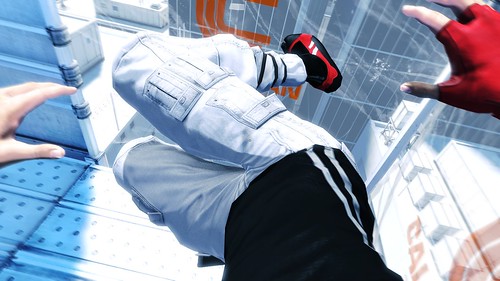
Like Tuesdays, the melee combat in Mirror’s Edge has no feel. Despite loading-screen guff about run-ups giving your flying kicks more damage, every blow bounces off every enemy, triggering a fake ‘stagger’ animation. Nothing is physical, everything is the result of abstract rules.
If I, an unarmed action hero, manage to run at a firing gunman and flying-kick him in the face before he kills me, it has to knock him down. Look into your hearts, DICE, you know this to be true. It’s a fundamental axiom of awesome, like glass breaking when I dive through it. The same goes for slide-kicks to the groin, which should lift your victim momentarily from the ground as he’s propelled backwards onto his ass.
Punches should be weak, of course, which is precisely why there shouldn’t be any. You’re a slim woman with unprotected hands, it’s just not wise to hit someone wearing full body armour. If you’re sprinting when you collide with them, the impact should make them stagger. If you’re stationary, Attack should do the same as Disarm – recall that the Disarm button is actually the “Beat them up and disarm them” button.

Waiting for an enemy’s weapon to flash red during a specific frame of the same nonsensical shoulder-nudge they each perform is preposterous. I feel like I’m standing there as a favour to the game’s animators, because they only know how to show me grabbing a wrist in one particular position. It’s a terrible challenge, relying either on using slow-mo so slow that the wait becomes boring, or learning the animations by rote to anticipate the absurdly brief red flash.
Design tip! You’re supposed to hide – not force me to study – ridiculous conceits like canned animations.
Disarming should always work – slowly if they’re firing at you when you initiate it, quickly if they’re staggered or prone. Enemies shouldn’t try to nudge you with their weapons in close combat: you’re still in front of their gun, there’s no reason for them to stop firing. Instead they should start to run backwards as you approach, trying to keep you at a distance.
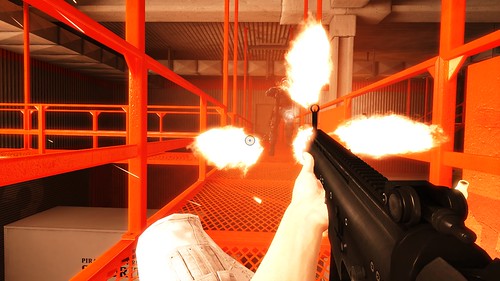
I love all the different words reviewers have found for this: loose, hollow, shaky, weak, fuzzy, bland. Obviously to make an unprecedented free-running game you can’t devote the time and budget it would take to make a really punchy shooter too. I wish DICE had seen the bright side of this, though: they didn’t have to! Shooting doesn’t have to take up the player’s time or be their source of fun. You can just have guns outright fucking kill people, the way they actually would.
Hitman’s the closest model of what I’m talking about: it doesn’t make a great shooter and it doesn’t have to. You spend most of your time in situations where you can’t viably open fire, so enemies don’t have to be tough and interesting challenges when you do. They can just die.
Once you’ve got hold of a gun in Mirror’s Edge, it should make a lot of noise, have a lot of kick, miss a lot at range, but kill when it hits.
If some of this sounds like it would make the combat too easy, that might be because I think the combat should be easy. But I also think it should be used in a completely different way, and I think I’m going to have to make that post number 6.
P.S. Graham’s blog Zeitgasm has also been redesigned, and is also harping on about Mirror’s Edge in tones I mostly agree with. 83% though, honestly.