TOM FRANCIS
REGRETS THIS ALREADY
Hello! I'm Tom. I'm a game designer, writer, and programmer on Gunpoint, Heat Signature, and Tactical Breach Wizards. Here's some more info on all the games I've worked on, here are the videos I make on YouTube, and here are two short stories I wrote for the Machine of Death collections.


Search
Pilot: Boardwalk Empire
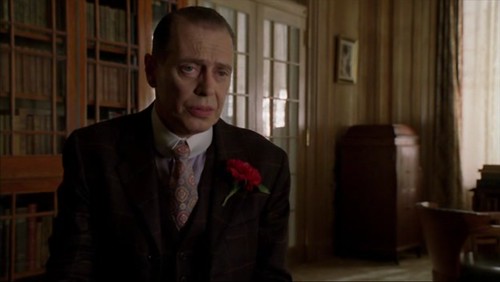
Prohibition-era Sopranos. Steve Buscemi is a corrupt county treasurer in Atlantic City in the 20s, and it’s lovely to see him play a position of power. I’ve got so used to him as a snivelling loser that it’s surprising how well his perpetual sneer works as one of superior disdain. The tone is just right, for me: Buscemi’s character is a villain, but not repulsive so far. It’s possible to enjoy the early twentieth century opulence of his life without being put off by the guy himself.
Pilot: Terriers
Opens on a conversation between two unappealing men in a pickup. A few lines into it, I know I’m going to love this show. Nothing about the premise is interesting or original, and the plot of the pilot is so over-familiar it could have been traced. But smart writing shows instantly, shows constantly, and never stops being a pleasure. Continued
Dexter Series Five
Ow, this was hard going. If you’ve seen all of season four, the John Lithgow series and the best yet, you’ll know what I’m talking about. If you haven’t, don’t read any more of this. I’m pretty sure I’ve already ruined it for both the people adjacent to me on the plane when I watched it. “Whose funeral was that?” “Uh…” Continued
The Maths Of This Week’s Futurama
Futurama hasn’t been this good in years. It’s been very funny this season, and I think most of the movies had some inspired gags, but this week’s was the first time the plot’s been as good as the jokes since the good old days. It did what all the best episodes do: found the humour value in an old sci-fi concept and took it to ridiculous extremes. Continued
Finally, On Lost
Man, there was a time when Lost was so exciting I’d blog about it here. When a series loses its way, as pretty much all of them have to in the merciless American format of multiple seventeen-hour seasons, it’s amazing how quickly it wipes your memory of how good it used to be. I was a Heroes fanboy, once. Continued
Some TV That Was Mostly Shown Last Year In Some Places
Last one of these – I won’t do a music one because I didn’t really get into much last year, and everyone’s heard Florence and the Machine. The Music Downloads tag has everything I liked enough to share.
Is this list in order? If you care, no. If you don’t, yes. Continued
Trust Me With Your Ears: Volume Five

A regular feature in which I ask you to listen to a sound file with no idea what it’s going to be. It’s an attempt to share the strange experience of rummaging through my old download folders, listening to forgotten MP3s with uninformative filenames. All I know about them is that I must have liked them at some point.
Volume Four was the shortest I’ve ever posted, this one is the longest – don’t click play if you’re in a hurry.
Keeping The Peace In Mirror’s Edge

It turns out that if you start talking about Mirror’s Edge in the Future offices, pretty soon a small crowd gathers to weigh in. In a group of editors and writers – one who gave it nine out of ten and another who thinks five was too high – it turns out we mostly agree. We all love to run, and we all get angry when we’re stopped by something difficult.
Most of my suggestions for the combat with cops would make it less difficult, and hopefully less awkward. But it can’t get so easy that you don’t feel threatened, and the grander issue is that it needs to be more avoidable. So this is about that.
The police choppers already work well as a propulsive force for the chase sequences that doesn’t often lead to death or frustration. But I’d like to change each of the three types of ground enemies, and how they’re used.

Cops: Not allowed to fire until they’ve issued two verbal warnings (“Freeze!” – “Stop or I will shoot!”) giving you a window to take one out or escape. Obviously once you’ve attacked one, others in the area can open fire. When they do hit, damage is much more serious – two hits kill – but they’re still wildly inaccurate. It becomes more of a tactical puzzle about how not to get shot, and the way forward never depends on turning a slow valve, climbing a slow pipe or working out where to head.
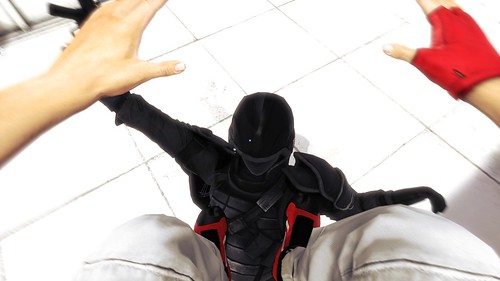
SWAT: Armoured and with two-handed weapons, these guys can’t be disarmed. But they’re only ever sent after you, so you never have to get past them to progress. They can be killed with stolen cop weapons, knocked out if you drop on them, or pushed into danger by a melee attack.
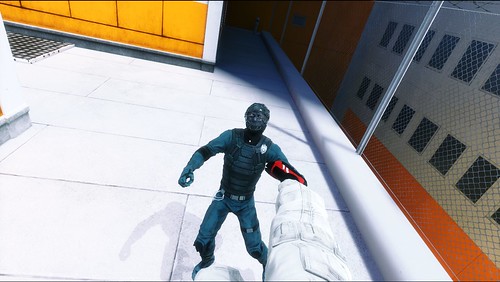
Chasers: Right now these guys have tazers, which are just kind of annoying. I think they should have mace. They should be knocked back by any melee move – to their death if they’re on a ledge – but if they get right up to you, they grab you and spray a blinding teargas in your eyes, sending your vision haywire and making you scream. You can try to flee while blinded, but if you don’t get away your third macing incapacitates you, and it’s game over.
Being chased was the perfect way to escalate Mirror’s Edge, but the Pursuit Cops are just so lame in combat; dancing about, tickling you with electricity and mild punching. I want to be freaking terrified of these guys. It would help if they didn’t look like dorks.

So one set is easy to deal with, another is hard to deal with but easy to avoid, and the last is hard to deal with or avoid – so do whichever you’re best at. I found lots of fun ways to lure Chasers into positions where I could knock them off a building, but bizarre rules meant that more often than not, I was the one knocked back by the crucial blow.
I was saying the other day that no matter how often the game explicitly tells you to stop and fight, the player still tries to run right past. Replaying the early sections at lunch today, I realised there’s actually a forced pop-up message in the prologue chapter that says “Always try to get away from enemies.” It couldn’t feel more like two different games that were code-merged at the last minute.
Trash Television
Dealing with the categories for this mini-redesign, I realised I hadn’t mentioned television in ages. Here’s a quick round-up of things you’re mostly probably not watching and mostly probably shouldn’t be.
Lost: Season one: I like everything about this show except Jack.
Season two: I like everything about this show except Jack and Kate.
Season three: I like everything about this show except Jack, Kate and Sawyer.
Season four: I like everything about this show except Jack, Kate, Sawyer and Ben.
Season five: I like everything about this show except Jack, Kate, Sawyer, Ben, Locke, Sun, Juliet, Charlotte and the plot.
Damages: Something about the style, tone and performances is still gripping, but every part of the plot this season is inferior. The main one’s a really tired cliché, Timothy Olyphant’s feels arbitrary and improbable, and the callback to the last season hinges on someone we saw shot still being alive – don’t ever, ever do that.
24: These tropes are still fun no matter how many times they’re repeated. Jack having to achieve the impossible in service of the terrorists is a classic. I notice Fake Hillary Clinton is the first president of 24-land to act in any way presidential – the others seemed to think their advisors outranked them.
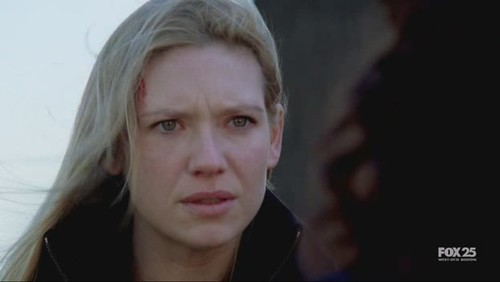
The Fringe: This ought to be trashy fun, but something about it really doesn’t work. I think it’s that it takes itself so goddamn seriously, and the lead actress, while talented, is so scowlingly concerned that she sucks the joy from the surrounding nonsense.
Lie To Me: Smug but entertaining. Tim Roth as a human lie-detector. The science is both more convincing and interesting than guff like CSI, and more relevant than the hilarious nonsense of Numbers, but of course still wildly exaggerated. The decision to back up some of their claims with quick flashes of famously ashamed, guilty or angry people showing shame, anger or guilt is a great trick.
Flight of the Conchords: Caught bits of this a few times when jetlagged in the States and it never clicked, but this new series has just been sublime. The Conchords are a real band and a fictional one, and this is a mockumentary made by the real one about the fictional one, with the story of their bad, meek indie performances sometimes told via the medium of their smart, genre-hopping real songs. This is their manly answer to the Black Eyed Peas’ famously dismal My Humps:
The Middleman
A few good ways to win me over, if you’re thinking of making a TV show with just me in mind:
– Female protagonist I don’t hate. Wendy Watson hereby joins the other… three.
– A character who doesn’t take half a fucking hour to get over every surprising turn of events. Writers! The stuff you’re writing didn’t really happen, so watching your characters refuse to believe it happened is not actually terribly entertaining for us!
– Conversely, disbelief at just how idiotic your plot is makes them highly entertaining.
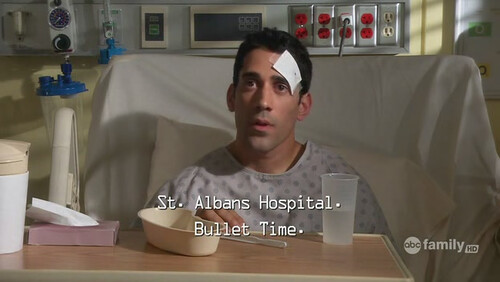
– Max Payne references.
– Scenes where a character starts to say something about what we’re seeing, then thinks better of it.
– Ultra-mild curse words, ideally accompanied by a character who actually does swear her face off at the appropriate times. Somehow that makes the gosh-darnits seem extra mild.
– Ending an episode with a Russian Futurists song. This one was laser targeted at me.
Dr. Horrible’s Sing-Along Blog
After proudly announcing a return to normal programming, I studiously wrote the first line of eight different posts and then watched Futurama until I passed out. I’ve been working for fifteen consecutive days at this point and I don’t sleep for long, so you might have to bear with me a bit.
This needs blogging about urgently, though, because it’s an online televisual event that will happen at an actual time! Tomorrow! Written by Joss Whedon and some other people, starring Nathan Fillion, Neil Patrick Harris and my close personal friend Felicia Day, it has two things in common with Firefly, and it’s about a supervillain, and it’s got Felicia Day, who is interviewed in the issue of PC Gamer on-sale in two weeks. Run, don’t walk, to your newsvendor. But run slow enough that you get there around the end of July.
It’s also a musical, and admittedly I haven’t liked one of those since Dancer In The Dark, but still. The three acts go up Tuesday, Thursday, Saturday, and stay up till Sunday, but I’m particularly keen on watching it as it comes out, because I am as mentioned in love with the idea of international premieres.
The premiere is something the internet’s sort of destroying and recreating at the same time: movies are splattered across the release schedule as people pirate them early, wait for the DVD, or wait to pirate the DVD. TV is Tivo’d and DVD sets are Netflixed bit by bit, but increasingly significant things are getting put out as webisodes. And in that, we’ve got the communal excitement of every fanatic devouring new content at the same time, world-wide instead of country-wide.
…
S’cool.
Update! Spit! This thing is the exact opposite of what I just said! It’s being broadcast via the evil Hulu, which is US-only. Way to defeat the whole spirit of the thing, jerk-wads!
Nevertheless, it is live now, and if you just grab Hotspot Shield or another sneaky proxy service of your choice, you can disguise yourself as an American and watch. Think of it as a baseball cap and a few extra pounds for your browser.
Update! It’s good! But doesn’t get very far in its 14 minutes. I now advise waiting till it’s all out on Saturday and watching then, since someone blew the whole worldwide premiere idea. Felicia suggests non-US people wait ‘a bit’, and adds a smiley face. Make of that what you will.
Update! As Iain and Graham note, the US-only restriction seems to have been removed.
Update! Act 2 is out and even better! Also, the whole thing is getting crazy popular, which is awesome. Provided they can refrain from fucking up the region thing, more of this sort of thing!
Update! It’s over! What did you think? Spoilerific comments below. I thought it went from good to great and back to good. The end seemed to be leveraging an emotional investment that I didn’t really have. I was there for the lols.
Lost, Season Four, Spoilers, Obviously
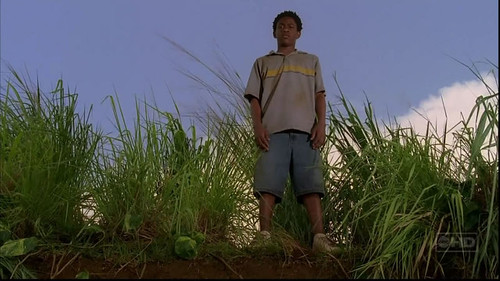
The interminable filler episodes between each premiere and finalé were doing a pretty good job of killing my enthusiasm for Lost. And towards the end of season three, the silliness was just getting silly. There’s a character called Taller Ghost Walt. Jack’s dead dad got better. Ben isn’t really in charge, he takes orders from an invisible man who can cure cancer and lives in a teleporting shack but hates technology.
But then I enjoyed the very end of that season, in an I-don’t-really-care way. And now I’m enjoying the start of the new season, in an oh-wait-actually-I-do way.
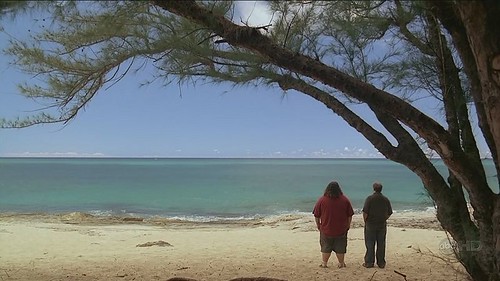
Starting on a Hurley episode was a quick way to my heart. I could have done with less teleporting shack action, particularly since it now apparently has Jack’s simultaneously dead, undead and never-died dad in it, but even that is sort of entertaining from Hurley’s perspective.
Glad that the factions finally split, glad that Jack’s was so unpopular, and glad that, after he made his choice, it became woefully clear that The Other Others weren’t here to rescue them. Daniel, the nervous physicist with a gun, does such a dismal job of reassuring them that his every scene is comedy.
The Other Others, unlike most of The Others and The Tailenders, are mostly welcome additions to the cast – Daniel’s loveably neurotic, the pilot’s likeable, Miles The Angry Semi-Evil Techno-Exorcist is likeably dislikeable, and the woman will hopefully die soon.
I couldn’t tell you why the wilfull absurdity of Miles’ profession doesn’t grate with me the way the invisible cancer-curing teleporting luddite did. I think because it’s brief, and no big deal is made of it. That understatement also does wonders for the scene with Daniel’s bizarre experiment – it doesn’t overplay what happened there, but it’s fascinating if you got it.
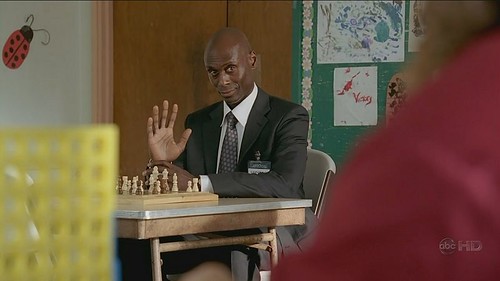
Hello, dude from The Wire! Explain chess to us in Baltimore gang terms.
But the main thing I love about Lost at the moment is the darkness implied by what we’ve seen of the future. I’m really pleased they stuck with the great idea of switching to flash-forwards instead of flash-backs, leaving the island in the past and making it feel like the plot’s finally progressed. And I’m even more pleased about what they’ve shown.
Kate hates someone so much she can’t even be civil about his funeral (my bet is Michael, by the way). Jack hates his life so much he spends it trying to get back to the island. Hurley’s so haunted that he jumps at the chance to spend the rest of his life in an institution. And Sayid – Sayid is a hitman for Ben?
That’s the worst – and hence best – of it. They’ve escaped the island and they still haven’t escaped Ben. The weasely mass-murderer who seems to spend most of his life at their mercy, yet always end up back in charge. Hopefully the reasons for this won’t be as feebly contrived as Abram’s scoffable methods for keeping Ron Rifkin’s character ahead in Alias.
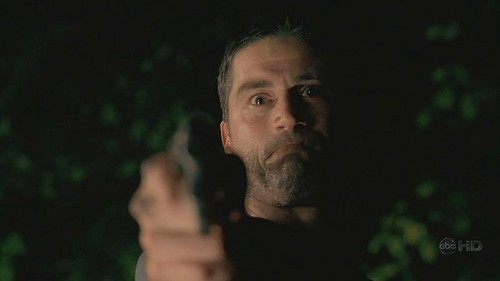
Graham points out that Lostpedia (from which these stills are stolen) is overflowing with absurd theories. My favourites are that a change in photo frames during the Miles flashback indicates an entirely new timeline, that the island is keeping Jack’s father alive so he can pay Sawyer back for a drink, and the entire Theories section on the nature and causes of Jack’s beard in the final episode of last season:
Jack’s beard
- Jack grows a beard because he’s become an alcoholic addicted to pain killers who doesn’t take care of himself because he is depressed.
- Jack’s stubble appears Grey on the island, but his beard is not in the flash forward.
- He could have just dyed his beard.
- Jack has become “an alcoholic addicted to pain killers who doesn’t take care of himself because he is depressed” but cares enough about his appearance to dye his beard to not look old.
- He could have just dyed his beard.
Seeing the Lost game recently, which Damon Lindelof describes as “RIDICULOUSLY AWESOME!”, had made me forget that anyone involved with Lost was ever talented. I’m glad the fourth season started to remind me.
Things Round Here Have Changed
But I’m tinkering with a redesign for this site that will likely go live in the next week. I like what I’ve got so far, but every time I look at it I half-glimpse something much, much better, and I’m trying to work out what to change to make it into that. In the meantime, and in the spirit of preparing for a New Year’s reboot, I’m posting things I’ve been meaning to post for ages. From the TV show Carpoolers:
I’m actually not wild about it as a sitcom, but there’s something brilliantly infectious about the radio singalong scenes. See also the ad.
Things I Forgot To Talk About Round-Up
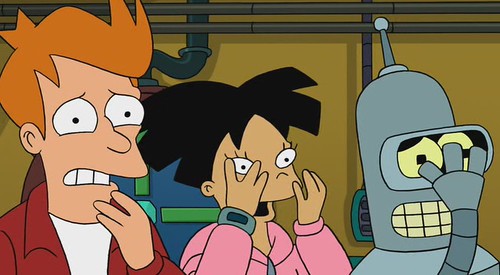
Futurama: Bender’s Big Score: if you’ve seen Score and felt that it’s a little heavy on the fan-service – hi. I’m one of those fans it was servicing, and it did it very well. I didn’t need that much Leeloo, and the songs were needless and clumsy, but other than that it was joyous.
I’m the sort of fan who gets an enormous kick out of the new theme tune, the triumph of bureaucracy, the explanation for how Gore lost the election, the obsessive retconning of the pilot episode’s pivotal moment, the cyclic timeline mathematics and the titular payoff at the very end. Speaking of the theme tune, have you heard the 1967 original? It’s surprisingly awesome.
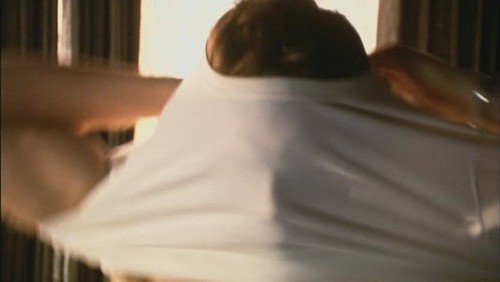
“Are you free?”
“You have no idea.”
Dexter Season Finale: the only thing wrong with this season of Dexter (apart from the unaccountable soap-opera interlude that was Rita’s mother) is a certain character lapsing into a hideous crazy-stalker stereotype. But the finale got so much mileage out of the mess this created that I can almost forgive it. The scene with three people and a large black bag was almost unbearable to watch. More spoilerific discussion should probably go in the original comments thread.
But yes, fantastic. The leadup to this over the last handful of episodes is the best Dexter has ever been, and Dexter is itself near-perfect television.

“Let’s see if the best bed in Kaer Morhen can hold us!”
The Witcher: broken sexist porno that’s coming up in a lot of game-of-the-year lists, and got huge review scores everywhere but with us. You play a badly scarred grey-haired old man in leather trousers, to whom a procession of identically-shaped redheads surrender themselves sexually after three lines of astonishingly bad dialogue. Post-deed, you are awarded an achievement souvenir card showing the girl naked, just in case you didn’t already feel like a pathetic mysognist.
Somehow it’s even more wretched than the despicable Leisure Suit Larry games – the last of which revolved around date rape. The fact that Larry’s love interests even needed to be date-raped before they’d sleep with the idiot hero automatically makes them stronger characters than the Witcher’s.
It’s not that I can’t imagine what people see in the Witcher – I haven’t played it through, maybe it gets amazing after four hours of insufferable dross. I’m just appalled at what they can ignore. The huge script cutbacks before release have been achieved by simply deleting swathes of lines, so conversations are riddled with bizarre, glaring holes that not just make for abysmal fiction, but in many cases render events truly incomprehensible.
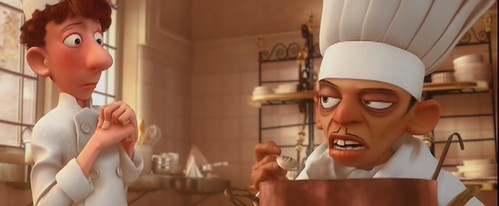
“Laurent ran guns for the resistance.”
“Which resistance?”
“He won’t say – apparently they didn’t win.”
Ratatouille: I hate to be down on such a sweet film, but I’m so tired of that nervous kid cliché and the angry boss who’s supposed to be funny because he’s short. Brad Bird has uncharacteristically little to add to those grating, ancient stereotypes, and the central conceit is just surreal.
The premise is a rat who can cook, and a kitchen boy who cannot, but the film has no workable idea for how the two can collaborate. It ends up inventing a physiological mechanic so utterly nonsensical that it’s downright creepy to watch.
The rat and dough physics modelling is fantastic, and it made me laugh perhaps twice, but it’s so far from the spark of The Incredibles.
Duke Nukem Forever Trailer: after ten years of development, the first movie of the incarnation that’s actually likely to be released has come out. It features no dialogue until, at the end, protagonist Nukem stands up and says, essentially, “I want to shit on you.”
I am at a loss.
Pushing Daisies Continues To Be Incredible
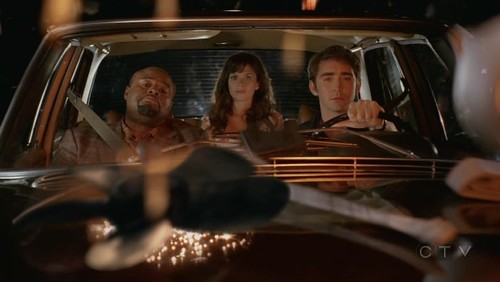
The Incredibles came out around the same time as Half-Life 2, and I remember feeling relieved – amongst much else – to see that there are people in other media cramming as much genius, expertise and love into every square inch of their work. If anything The Orange Box’s diversity makes its brilliance a more dazzling achievement than Half-Life 2, and Pushing Daisies is right here to give off that same reassuring glow: it’s okay, people outside of Valve can be this clever too.
The second episode really does cement it as a masterpiece of that order. I absorb high-bandwidth, info-dense, fast-talking stuff like The West Wing with relish, but the hurtling pace and sheer concentration of brilliant ideas, stylistic flourishes and exquisite jokes in Daisies leaves me reeling. It truly is just joyous, and insane, and sickly and dark all at once.