TOM FRANCIS
REGRETS THIS ALREADY
Hello! I'm Tom. I'm a game designer, writer, and programmer on Gunpoint, Heat Signature, and Tactical Breach Wizards. Here's some more info on all the games I've worked on, here are the videos I make on YouTube, and here are two short stories I wrote for the Machine of Death collections.


Search
N
The Basics
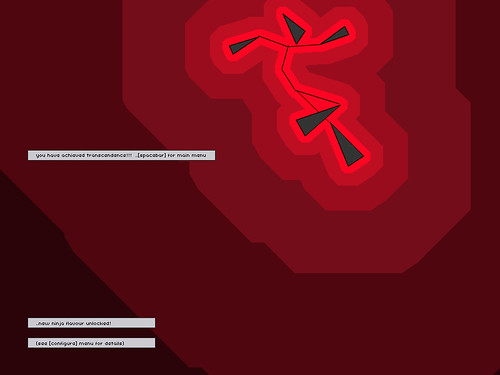
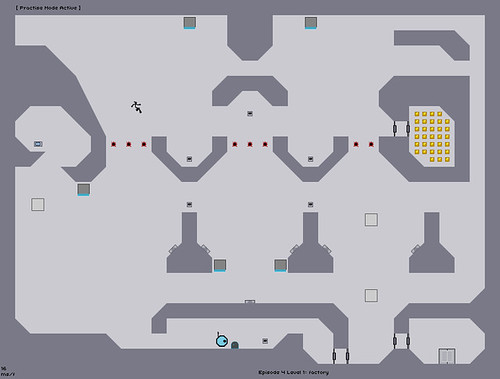
2D side-on non-scrolling platformer in which you control a tiny black ninja. Unlike regular ninjas, this one is not all about flipping out and cutting people’s heads off – instead, he his about avoiding stuff, collecting gold (to extend his lifespan) and getting to the door to the next room so he can play air guitar, dance, punch the sky, run on the spot or simply collapse and raise one victorious arm. In his way are an array of instakill obstacles: mines, drones, seeker-drones, sniper turrets, laser turrets, machinegun drones. These things have proper in-game names, and I know them because I am cool, but these are more descriptive.
The Appeal
Moving is fun in N. It’s physics-driven, so factors like momentum and friction affect your trajectory. Picking up speed, bouncing off walls, hitting jump pads and surviving huge falls is just pure joy. You can feel the weight of the ninja, thrill at his velocity and scream as you feel the inevitability of his demise, then sob as his limp ragdoll corpse is tossed cruelly around by the objects you so carefully avoided – with one important exception – in life.
The fact that the game gets extraordinarily hard before its five hundred levels are up means that you’ll get stuck and have to redo some levels many, many times. For reasons I’ve only just recently come to understand, it doesn’t get boring. Part of it is that moving is, as I say, fun, and successfully avoiding things even more so. But what counter-acts the repetition is that you keep getting better at these early obstacles.
It’s not like normal platformers where you just jump at the right time, wall-run for the right bit, spring off and you’re done, 10/10. In N every move you make affects the angle and speed of your next, and your weak air-control means even simple jumps are organic, fluid things in which where you want to land is constantly changing in reaction to the circling drones, the focusing cross-hair of a sniper turret, the pursuing rocket. The defense systems you’re dodging are all automated, but their reactions are never the same because your actions are never quite the same. Even if you were trying to exactly replicate your previous performance, it’s not humanly possible.
And you’re not, of course. You’re instinctively trying to do it faster and more stylishly – if you pay attention you’ll actually feel yourself getting cockier. Deservedly so – you rock. Your route through these obstacles is not merely reliable, but also embued with flair, arrogance and hurtling, blinding speed. You’ll dance effortlessly through these nerve-wrackingly hazardous spaces you know like the back of your hand, carressing walls as you fly up them, stroking the tops of deadly drones as they zoom angrily past, hugging laserbeams and bullets like old friends. Nothing can touch you and nothing can stop you, except the obstacle you’re currently working on. Which will electrocute, crush, shoot, burn and explode you again and again.
The Essential Experience
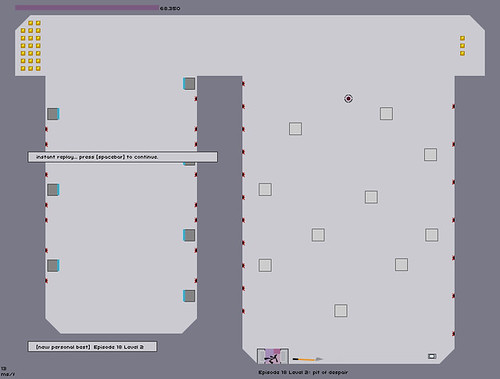
Hitting a jump-pad and, on your way up, brushing the side of a bounceblock with a gentle touch – you don’t wall-hug long enough to lose your velocity, but you do jump from it, which gives you an extra boost on your already extraordinary ascent. In N, being a fatal distance from the ground is a universe of possibilities rather than certain doom. Gaining height is both scary and exciting.
Morrowind
The Basics
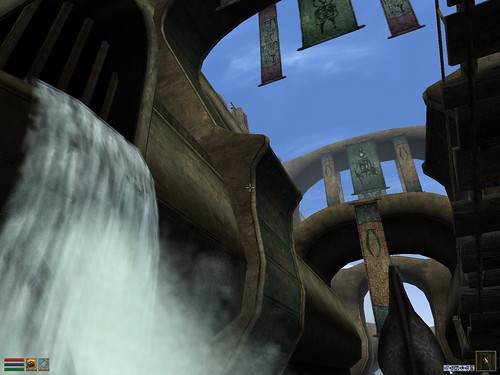
Massively single-player first-person RPG – a huge and freely explorable fantasy world, hundreds of quests, of which the main plot line – the longest game I have ever played – accounts for less than half. You can be stealthy, fighty, magicky or any combination thereof, you can join guilds, go anywhere, kill anyone and anything and – importantly – take its clothes and anything else it might have had. Combat is real-time, and requires nimble fingers to jump around, dodge and aim. Skills level up the more you use them, rather than by assigning stat points, so you become the character you’re trying to be.
The Appeal
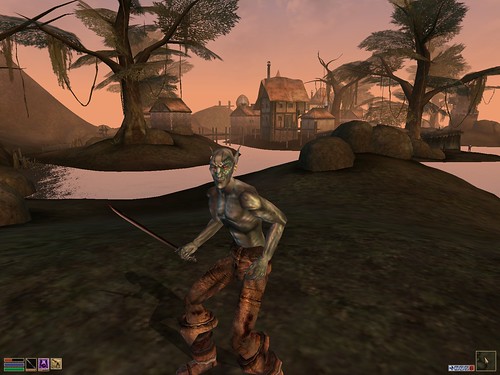
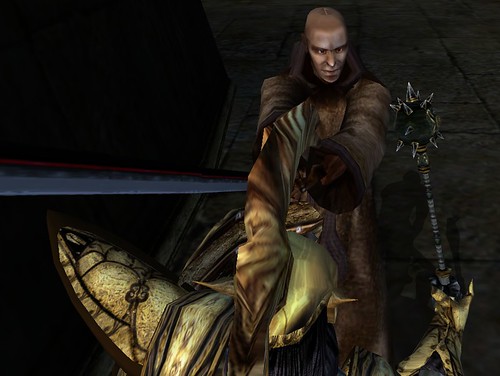
RPGs ought to be the best games in the world, but virtually all of them have achingly dull combat and insist on a third-person view. The Elder Scrolls series has been chugging merrily down the lineage set out by Ultima Underworld, and with each iteration, more people say “Hey, that looks way better than the frustrating and unengaging rubbish we consider good!” Morrowind was when the series moved to what we recognise today as a true 3D engine – 3D accelerated, everything made of polygons. It’s about being in an RPG world for pretty much the first time – physically hitting monsters with a sword to hurt them, having to aim your fireballs like an FPS. Climbing mountains that even the developers don’t know are climbable. Stumbling upon a wooden door set into the rock, going inside and finding a smuggler’s hide-out with bodies, diaries and a story to be deduced. Short answer: it’s first person.
The Essential Experience
Filling out a form. It’s a clever conceit for character creation – the Census And Excise Office asks you to fill out your personal details for their records. The magic of the moment, though, is threefold: a) the music – the perfect fantasy theme tune, full of grandiose scale, promise and magic, b) the sheer range of options, even before you get to choosing skills and abilities – there are thirteen races, and c) seeing the world for the first time – you’ve just come out of a prison ship, so you get the three-hit combo of the lovely water effects, a giant tick standing in the lovely water effects, and the unearthly noise the giant tick standing in the lovely water effects makes.
Half-Life 2
The Basics
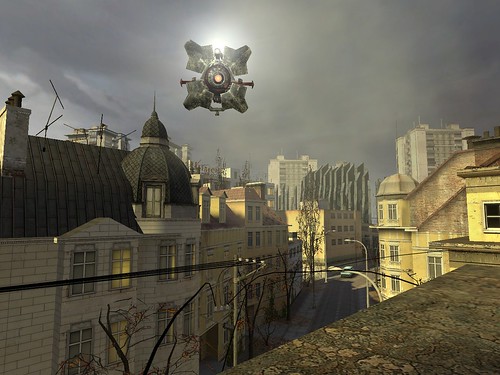
Sci-fi FPS in which your character never speaks, we never leave his viewpoint, and no-one ever bothers to explain the plot to him. He wakes up in an Orwellian future, humanity oppressed by a collective of co-opted and modified alien species. He must help the pockets of resistance he finds to overthrow the jerks. Combat is half shooting and half physics-based, using a device that can drag objects to you and then fire them out at speed.
The Appeal
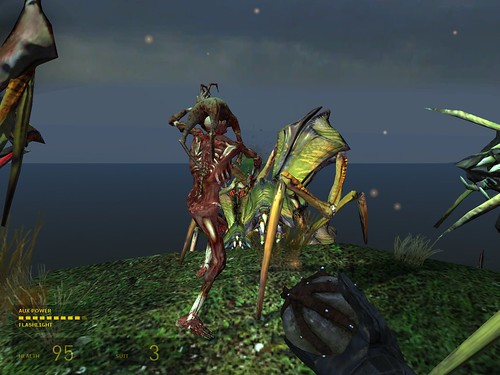
The gasmask moment, the crowbar moment, the Manhacks moment, the chopper fight, the dam jump, the Gravity Gun moment, playing with Dog, the sawblade moment, the fast zombie moment, the black zombie moment, the Gregory moment, the jeep jump over a gunship, the guided rocket fights, the shotgun-battle stop-offs, the Antlion assault on Nova Prospekt at dawn, Dog versus the APC, the Strider fights, inside the Citadel, the Super Gravity Gun moment, The Explosion. I had higher expectations than anyone, and each of these astonished me. I have never been so impressed by anything in my life than by Half-Life 2. In another game, though, these would be reduced to good ideas, nice touches, memorable experiences. Here, they were mind-blowing. It wasn’t about the actual events, in the end, it was about how convinced I was that they were really happening to me.
They were so detemined that it should feel right, they recreated science itself for their world. For me the only reason to hold ‘linear’ against a game is if it controls where you’ll be and what you’ll be doing in order to avoid the hard work of genuinely crafting a world. No danger of that here – this is the most physically convincing, tangible world short of the real one. Everything you do sounds and feels right, and thanks to the ability to pick things up and throw them (with your hands or the Gravity Gun), you can do an awful lot.
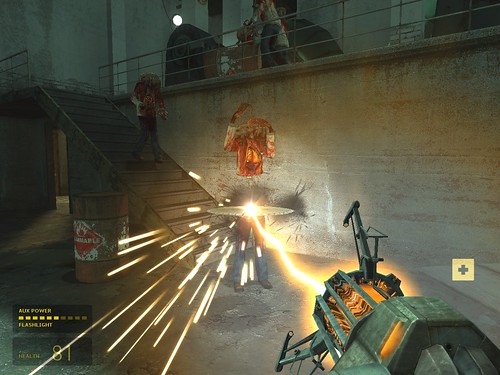
This ‘feel’ I won’t shut up about is only half physics – most of the rest is the absolutely perfect sound. I go around throwing grenades at things just for the sound they make when they bounce off different surfaces. The fact that it is always, always the exact right sound for a small, heavy metal canister bouncing off whichever of the hundreds of surface types I’ve chosen to toss it against, is mind-boggling to me. This is a grenade. Its purpose is to explode. Who the hell cares what the bounce sounds like? It’s going to be muffled by gunfire anyway.
Valve are the only company in the world who know just how much it matters, and have the resources and time to get it exactly right every time. It is perfection, and games have never come close before. The result for the casual player is just better immersion, which is important and everything, but the result for people like me is more profound. We play games out of a sense of adventure, to travel to places more amazing than any on this Earth. But we never expected it to feel as much like a real place as Half-Life 2 does. That’s why I keep going back.
The Essential Experience
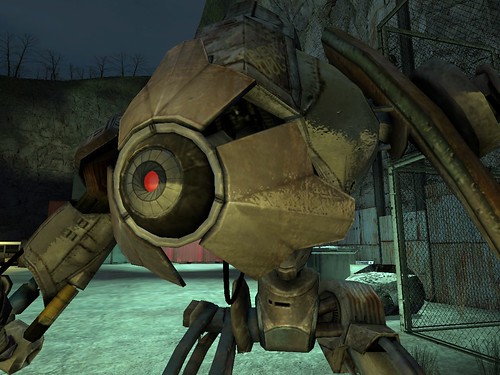
Barney throws you your crowbar – great moment. I think for a second, then reload the autosave and do it again. This time, I step back and let the crowbar hit the ground. It clangs against the concrete and clatters to a standstill. The sound, the bounce, the feel is perfect, and yet there is absolutely no reason to account for the possibility that some idiot might jump out of the way of the crowbar just to see what sound it makes when it hits the ground. And they didn’t have to. They just went to the Herculean effort of making a world in the first place, and now every eventuality works perfectly. It can seem a subtle and merely philosophical difference, but if a crowbar falls in the concrete jungle and no-one hears it, it makes a sound. It goes CLANG.
Deus Ex
The Basics
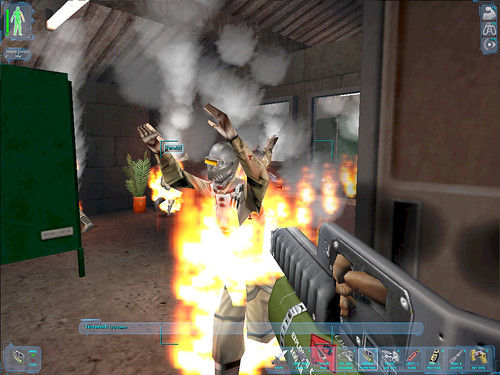
Open-ended near-future FPS RPG hybrid. You’re a nano-augmented super-agent working for an international anti-terrorist organisation, and conspiracy is afoot. You have ways of killing people, incapacitating them and sneaking past them, and you can gain access to places by hacking, lockpicking, explosives and stacking objects. The levels are huge, open, real-world environments and your route to your objective is something you have to come up with yourself rather than following the ‘path’ of the level.
The Appeal
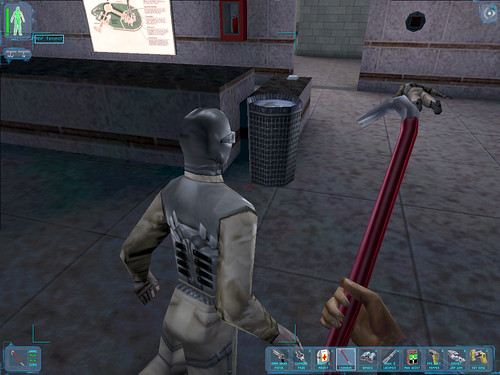
It’s not about the parts where you make meaningful choices about whose side you’re on and who lives and dies. It’s about lateral thinking and improvisation – moving in the kind of possibility space created by the huge variety of tools at your disposal. In that environment, you win or lose on your ideas – and it’s gloriously satisfying to win, and invariably hilarious to lose. When you’re crawling across the floor with no legs, through a cloud of tear gas, surrounded by enemies and with no ammo – all because you didn’t think your idea through properly – then you’re having fun. And when you survive, kill three grown men better armed and legged than you, and destroy the whole facility – just by out-thinking them – then you are as a God, and will finally understand why this is the best game ever.
The Essential Experience
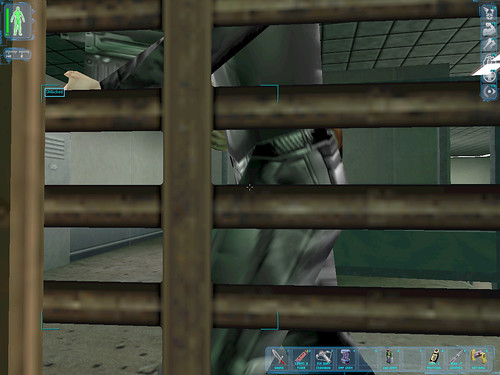
What springs to mind at the mention of its name is the standard pistol, close enough to an NSF’s head that I know the shot will kill. It’s symbolic because while there are guns, killing someone with them requires you some kind of tactical thought in terms of getting close enough to hit them in the head.
Without training your pistol skill to Master, that’s very difficult to guarantee at any kind of range. And so the game is not about aiming, it’s about thinking tactically about how to get close enough with the tools you’ve got that you won’t need to rely on your aim.
The reason this resonates with me is that I couldn’t fire a gun to save my life, and in Deus Ex I can actually play a skilless character who wins because of the intelligence in what he does – which is all mine.
My Philosophy, Circa 2005
This is a sort of meandering overview of my view of humans, brains, souls, desires, and the meaning of life, written in 2005. I haven’t drastically changed my mind since then, but I have cut out a few bits that didn’t seem relevant and stuck to the point a bit better.
Some people think of themselves as just a body with a brain. Some people think of themselves as a soul: they could continue to exist even after the body and mind die. Some of these people think they had other lives, in a completely different mind and body. If you’re just a body and brain, there can’t be an afterlife or anything because the body and brain rot to nothing, they don’t go anywhere, they just die. And if you’re a soul that used to have a different mind and body, you don’t have much of a personality of your own; if you’re the common factor between these two different people, you’re a bit wishy-washy.


 |
 |
|
| These are extra bits – you don’t need to read them to get the gist of what I think, unless you do, in which case do.
There are other weird things about the soul idea: labotomies, brain damage and hemisphere separation are all physical things that can happen to the brain, and which change the person in incredibly fundamental ways. Hemisphere separation is this freaky thing that’s happened in brain damage cases where the link between the left and right parts of the brain has been severed, but both have gone on to function independently. The left hemisphere controls the right arm and the left eye, and similarly for the right hemisphere, and they got a person with this to do all kinds of crazy tests. In one, they showed the person a pencil on the right edge of their vision and asked them to write what they saw. The left part of the brain saw the pencil and made the right hand write ‘PENCIL’, but by the time it got to P and the vertical line of the E, the other half of the brain (which could see what was being written because it controlled that half of the vision) thought it was going to write ‘PIPE’ and – because it too was trying to answer the person’s question, but hadn’t seen anything – tried to draw a pipe (that half isn’t very good at writing). The other hand scribbled out its drawing and wrote ‘PENCIL’ beneath it. Is there just one soul at work here? You and I are distinct, and on that basis I assume we can’t share a single soul; at least, if there’s only one soul between us, it cannot be what I am and what you are, because we’re two different things. So since the two hemispheres are now distinct from one another – one can know something the other doesn’t, one can think something without the other knowing it – they can’t still be one soul, because they’re two different thinking entities. If there are two souls at work after hemisphere separation – if we’ve split the soul – then why call it a soul? Why not change the word to ‘brain’ or at least ‘mind’, if the soul is going to be dependent on what physically happens to the brain? Even if you want to keep calling it a soul, there can’t be an afterlife or anything: if splitting the brain into two thinking entities turns your soul into two souls, destroying the brain completely must surely turn your soul into no souls at all. We now know too much about the relationship between the brain and the psychological behaviour of a person to uphold a reasonable philosophy about souls. Either a soul has nothing to do with who you are – in which case who cares? – or it shadows what happens to the brain, in which case there’s no reason to suppose it’s a separate entity. Keep calling the mind a ‘soul’ if you like, but it’s going to get confusing when you’re talking to people who think of them as totally separate things. |
||
|
|
|
|
|
| A human body and brain is physically a lot like an animal body and brain. I mean, a cat and a dog have more in common, but our make-up is more like theirs than it is a privet bush, for example. They also act alike; again, not as much as they do each other, but a lot relative to the established point of comparison, the privet bush. We fight for survival, eat, drink and mate. We go about them in very different ways to animals, but our objectives are exactly the same: survive, reproduce successfully.
The meaning of life has a lot to do with what you are: if you were a soul, the meaning of your life could have something to do with a non-physical realm, some spiritual purpose or meaning. If you’re just a body and brain, the meaning of your life is to have kids and make sure they do okay. A big part of making sure your kids do okay is making sure they’re strong and attractive. Some parts of that can be done before conception, so we instinctively feel pretty strongly about hooking up with the mate with the best genes we can get. Virtually the only thing we feel more strongly about is protecting the kids after birth, and both those things are called love. If we’re an animal and not a soul, the meaning of our lives is to find the best possible mate and ensure our childrens’ survival. Which in non-animal terms is more commonly phrased as “follow your heart’s desire, settle down and do right by your family”. |
||
|
|
|
|
|
| Your heart’s desire is your genes’ desire, and the more powerful, immediate and inarticulatable the feeling, the more it has to do with your genes’ feelings about the look of someone else’s genes. All feelings and emotions tell you that you want or don’t want something, and what you instinctively want is always what’s best for your genes, or the species.
It’s a rather undignified idea, but there’s absolutely no doubt about it, and it’s so universally manifested that it’s impossible to understand humans in even the most rudimentary way until you accept this. Most people’s answer to this is not to understand humans in even the most rudimentary way. This is why things go so wrong. But this isn’t even to say passionate desire and stuff are superficial – appearences matter enormously to the welfare of your future children; not only do the offspring of you and an attractive partner have a better chance of being healthy and robust, but they also conveniently have a much better chance of being attractive themselves, making grandchildren more likely and more healthy. But both the physical and the metaphorical ‘heart’ are parts of a human that have no fundamental differences from those of an animal. You might say the difference is the mental stuff, obviously, what they’re like personality-wise. That stuff’s important. But if someone with the same personality as your partner had showed up in your life, but was the wrong gender, would you have fallen in love with them? |
||
|
|
|
|
|
| So when people think what separates us from animals is our capacity to love, or to care so much about our offspring, they’re exactly wrong. That’s what we have in common. If people think it’s God, or souls, that would be true if such things were coherent concepts, but as I say, I can’t see a tenable belief set that gives those any practical meaning.
Some people think we are, essentially, animals. Say what you like about that view, it’s philosophically full-proof. I think they’re right, to a large extent, and it’s not a bad thing really. Animals are okay. They sometimes get the things they want, and they seem to enjoy that. Other times they just eat rotten fruit or catnip until they pass out, and that’s fun too. I don’t think we’re fundamentally different from animals. But that eating rotten fruit and catnip is where we’ve really gone to town. We’ve looked at the Skinner box our genes have put us in – achieve biological imperative, get a rush of endorphins – and figured out how to bypass it. We’ve found the endorphin stash, and we don’t have to press the lever to get it anymore. We can trigger pleasure with entertainment, to a far greater extent than animals typically do. That doesn’t make us better than animals, it may even be a defect. We still follow biological imperatives because they trigger stronger desires than most entertainment does at the moment – there’s no videogame we want more than the person we have a crush on, and it’ll be a scary day when there is. For now it just gives us some breathing room, the ability to take time off from chasing what our genes want without going mad with boredom or frustration. Most of us are able to recognise and compartmentalise strong emotions like hunger, lust, or anger, and decide whether to act on them. We don’t rape everyone we fancy, and we don’t hit everyone we hate. It’s a sliding scale, and animals are on it too, we’re just a lot further from that untamed baseline. And the interesting point on that scale is: when can you entirely ignore your biological imperatives to do things like reproduce? |
||
|
|
|
|
|
| We don’t rape everyone we fancy, and we don’t hit everyone we hate. But we do let the drives behind those emotions influence us to a depressing extent, usually without realising it. We pay more attention to attractive people, and perceive the things they do as more interesting and worthwhile than if they were done by someone else. We let our desire to protect our children distort our view of others and their intentions. We let the intensity of love obfuscate its causes, and prevent us from analysing its significance. And some people let attraction override fidelity.
Our unwillingness to see any of these things in evolutionary terms, to believe that we operate on the same logic as an animal, is what’s preventing us from recognising them and stopping them when they’re destructive. |
||
|
|
|
|
|
| I think I am an animal with the ability to step back, recognise that I am an animal, and stop acting like one if it’s not going to be fun. A piloted animal. So the meaning of my life is just the fun part. Whether obeying animal instincts or shortcutting them with entertainment is the best route to it, the pleasure that used to be a bribe is now the ultimate goal.
It’s a pretty simple conclusion, and one lots of people come to by a shorter route. The only advantage of looking at it this way is to be clearer about why you feel and want the things you feel and want, and to be smarter in calculating whether they’ll ultimately lead to more happiness or less. |