The_B: I really enjoyed reading this. It's hard to really add anything meaningful in a comment space - think this may be a good mass blogging subject to broach across most games writers to be honest - but I will say that part of it myself is constantly asking "Is it fun?" If something about a game is fun to me, no matter what component, then it gains positive feelings from me in that respect.

Rossignol: But what about lastability? :(

 
Pentadact: I guess... *shades* it didn't last.
 

Hovercraft: Goddamn it Tom, I wish every game journalist was as thoughtful and eloquent as you. Great list.

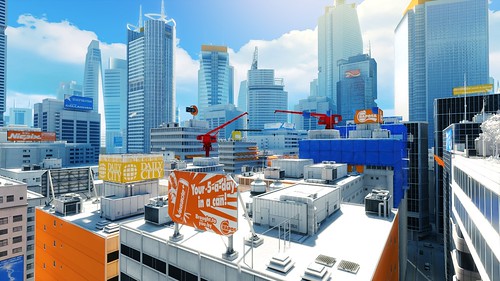
I completely agree on #4 with respect to Mirror's Edge, but Place is also responsible for my favourite single-player game of the last five or so years, Metro 2033.

It got mediocre reviews which focused on its less-than-spectacular action, at least relative to stuff like CoD4 and HL2. But I was so massively infatuated with the game's world that nothing else mattered. Turns out that post-nuclear apocalypse Moscow is somewhere I love to be.

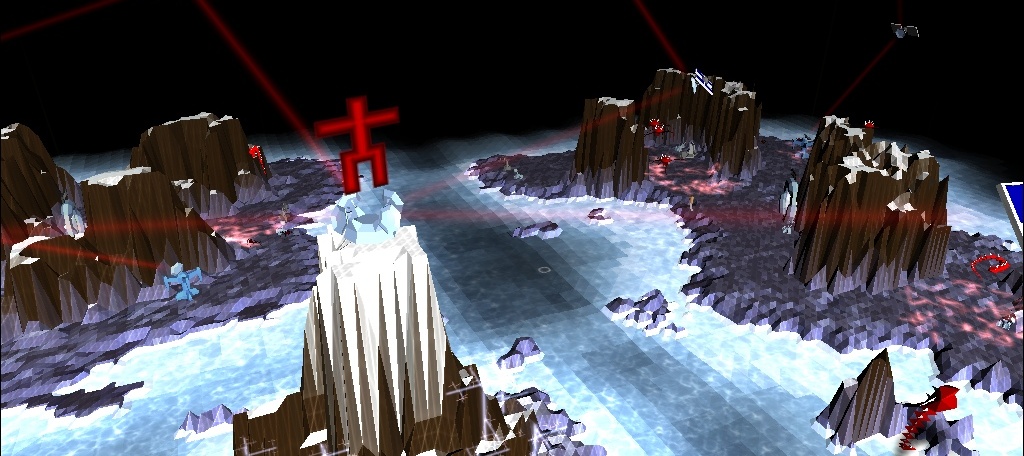
Jonn: ...I never finished that Darwinia level.

I should get on that.

(I love that game.)

Fish: This works fairly well for a singleplayer game, but what about competitive multiplayer games? #4-6 don't really apply to, say, TF2, CS, or Melee

Octaeder: It's good to hear that said about escapism. I heard a podcast a while back asking people about why they game and 90% cited escapism. I found that pretty depressing.

 
Pentadact: Hovercraft: cheers! Haven't played Metro, now I want to.

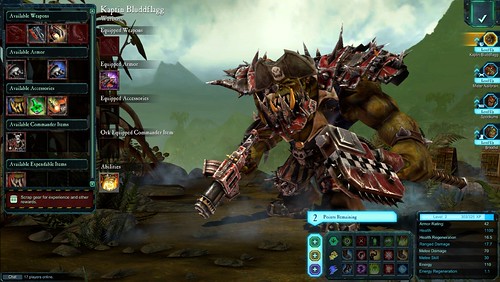
Fish: As I say, a game doesn't need all of them to be good. To me, though, 4-6 do apply to most multiplayer games. Some of my favourite maps are my favourite maps just because they're such cool places to fight in. Most multiplayer games are now built to use Promise as a long-term hook, particularly TF2. And I definitely get a kick out of playing the role of the Spy, or the homicidal Russian simpleton with a minigun.
 

Urthman: These are great categories. I think another piece of this is how the best gaming pleasures are a mix of these categories.

The pleasure of exploration in a game like Gothic 2 is a mix of having a great sense of Place (the world is both beautiful and interesting to look at) plus Freedom (you have real choices about where to explore that yield real rewards and other outcomes) plus Promise (there are tantalizing areas that are just off limits for various reasons) plus Challenge (monsters and other kinds of fun obstacles stand in your way to explore some places). If the Feel of moving and climbing around were better (as fun as say a Spider-Man or Prince of Persia or Mario 64) and if I liked the Fantasy a little more (being that guy in that world is okay, but could be better), then that exploration would be an ideal gaming pleasure.

Noc: WHAT IS BEST IN GAMES, CONAN?

 
Pentadact: Urthman: That sounds great. Yeah, I think some of the resistance to breaking games down like this is that people think it means games just do one or the other of these things. Of course they do lots at once, and they combine in amazing ways. The headshot in Counter-Strike is a masterclass in Feel, but it only stays special because the Challenge makes it rare. If you just line up some bots and execute them, it loses its appeal much more quickly.
 

checkers: Fascinating stuff. I find it particularly interesting you dismiss the idea of fun being unquantifiable: other mediums have more or less given up on providing any quantitic mark apart from overall score out of 5 (if that). Do you think games are special, or nobody thought about this in the early days of CD reviewing and it's too late to change everything now?

PS: Your two paragraphs starting "I’m sad to say" are gold.

Dave McLeod: Have you read Reality Is Broken? It gives the impression that games are at a basic level reward machines. That is, the way to make a game fun is to provide lots of things that are rewarding.

In terms of generating concepts for future games, that's not a particularly helpful. But it's a useful start for reducing playing experiences that were positive. Like you, weapon-feel and headshot-analogue moments come up a lot.

I saw a recent talking-head on the new Sonic Generations game, where he said something like "this is just like Sonic 1 / 2 / 3 because the more you avoid obstacles, the faster you go, so that reward mechanic is still there". Which made me think about how I've felt about various platformers that I've liked / disliked. And then it made me think about my mindless speeding displacement activity in LA Noire, dodging traffic in order to go faster, and how that seems to be satisfying, rewarding.

And then once I broke it down like that I enjoyed it less, incidentally.

I played WoW for the first time recently, because McGonigal keeps talking about it as a great 'reward machine'. And it strikes me that there are plenty of things like levelling, items, reputation, damage pop-ups, enemies-to-kill, places to see (and achievements for seeing round numbers of places), that mean that there is something generically 'rewarding' happening about every 5 minutes, at least in the early game.

Regarding story I'd love to see a game that's pretty terrible with a story that forces me to finish it. LA Noire is actually pretty much this, I think.

People (mostly ones that write for Gamasutra) talk a lot about 'Flow'. This seems to be what it is to not find something 'too easy' or 'too difficult', but 'just right'. The next time I see this knowingly referenced to as an idea somewhere I will remember to comment it here.

Rereading what you say about feel, and the examples you give, makes me think that many games where the 'feel of play' is satisfying can be reduced to a bunch of visual / aural rewards.

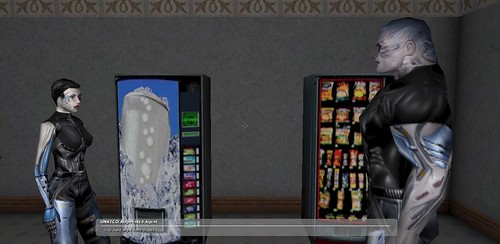
About Freedom, have you played Heavy Rain? In many cases it feels like Quantic Dream just create mundane environments (living rooms, supermarkets, expensive apartments), think of as many things that a person could do in those environments, assign them animations, lines of dialogue and controls, and leave it. It feels very much a domestic analogue to missions in Deus Ex.

Hopefully you've played this - http://armorgames.co... ...t-unlocked

Caleb: I find it interesting that you don't like WoW due to a lack of Feel, because as you've described it, I really enjoy its Feel and more importantly, I suspect WoW's distinct Feel is the reason I have a hard time playing other MMORPGs (combined with the amount of time and money I've allready sunk into WoW). Every time I try to play a different MMO (with the exception of EVE Online, which is so wildly different), it just makes me want to play WoW again...

Jason L: Dave McLeod: If you want to read more the originator of 'flow' as psychological jargon is a dude whose name is so impossibly Eastern European that copy-pasting will misspell it; I remember his book of the same title as being pretty good. The foremost proponent of flow as a determinant of game design is Xinhua 'Jenova' Chen, founder of ThatGameCompany and sole/lead author of Cloud, FlOw and Flower so far.

http://www.jenovache... ...theory.htm

 
Pentadact: Caleb: Yeah, I should probably have said 'I don't like its feel' rather than claiming it doesn't have it, which is pretty absurd.

What I mean is that my weapon does damage even when it didn't hit the enemy, missiles seek if I try to dodge them, sometimes my most devastating attack does no damage because the enemy 'Evades' it when the AI can't figure out how to get to me, and a level 65 bear that looks much like a level 5 bear in terms of physical strength is for some reason 3,500x tougher and stronger.

In other words, nothing most other MMOs don't do too.

Dave/Jason: Yeah, Flow's a great definition of a certain difficulty level that doesn't interrupt the experience. My definition of Challenge disagrees with whether that's ideal. I think it's important that the type of challenge is one you like so much, you're happy to struggle with it if its difficulty exceeds your abilities for a while.

There are big chunks of Portal I breezed through in a 'flow' kind of way, grasping what was required of me quickly, and getting better at the same rate the puzzles got harder. But if the whole game was like that, it wouldn't have been all that special for me.

I love it because it occasionally showed me something that was just completely impossible, until I bashed my head against it a few times. These bits absolutely interrupted the experience, but because the challenge was of a type that was really fresh and suited to what my brain enjoys, I loved struggling with it, and it's what made the game special for me.

I expect even Super Meat Boy fans have a bumpy experience with that game: it's virtually a series of brick walls. But if you like the type of challenge, that's what makes beating them more satisfying than other games.
 

Chris: Fascinating stuff, I really appreciate this level of thinking about something which a large majority think is a total waste of time. Taking the time to think about games this way makes them a richer experience.

I came to a similar conclusion about why I've sunk so much time into them a while back. Seeing what's over the otherside of a hill.

One standout moment for me fairly recently was in a game called "The Void", which is clunky and unforgiving yet oozes atmosphere. The first section you start in is a colourless island with strange protrusions emanating from it, a broken green house and a large, gnarled tree in the center. Slowly walking around the island I looked back at the tree to find a woman peering out at me from the inside a hollow in it, wearing a silk night dress and lipstick.

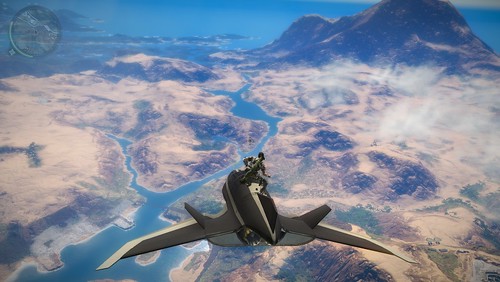
P.S. you nailed Just Cause 2 on the head for me right there.

Chris: P.P.S. Hey I've never played Deus Ex, should I? (that's probably gonna be a silly question)

dual_barrel: Nice article. Thanks.

Sooty: What does Tom think of Terraria?

 
Pentadact: Cheers!

He is planning to try it this weekend! Mr Senior tells me it's good.

And yeah, you should play Deus Ex. But if you bounce off it, in three months' time there'll be a more obviously appealing version of it out.
 

Alex: This was an excellent read, and very truthful.

Chris: Be careful with Terraria, after downloading it I thought I made a wrong move, but I gave it some time, and now I'm finding it hard not to keep digging a little deeper. Especially since I just found a chest with a double jump treasure inside. I think numbers 2 and 5 are strong in it, 2 being the sound of mining through stones.

DaveMongoose: A fantastic read :).

I find that 'freedom' and 'promise' are two of the aspects that appeal most to me - often I'm near the end of a game then get bored because these two start to run dry.

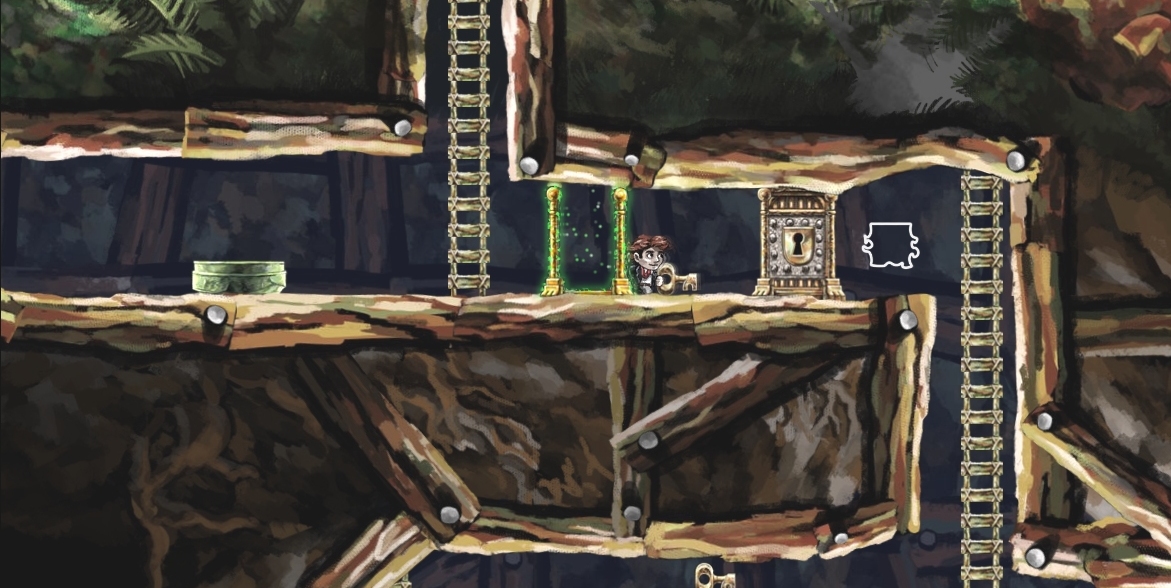
With Braid, one of the things I enjoyed most was the relationship metaphor conveyed through the books at the start of the worlds - would you count that as 'Place', since it's adding context to the gameplay?

“The former is confusing a game’s component parts with what the whole achieves. The latter is just giving up.” « The Talking Stove: [...] this post about what makes games good, PC Gamer scribe Tom Francis has basically unlocked every achievement in Games [...]

Bret: Well, know you've been fiddling on twitter, but I figure one more input wouldn't hurt.

Chrome makes the web layout look bad and insane. Still.

Bret: Now it works!

Also, good post. I probably will have more to say once it's properly processed.

 
Pentadact: Sweet! I literally solved that one in my sleep. I suspect there's some caching going on that's causing the glitches to last longer for some. If anyone's still seeing a mess, do let me know.
 

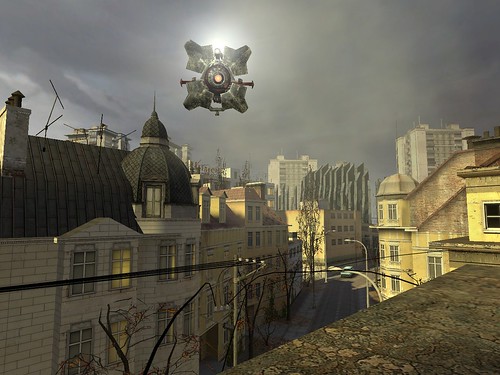
MartinJ: It looks good in my Opera now (was broken yesterday) but I liked smaller pictures better. I think the general rule is that break images in blog posts can be wide but shouldn't be too big overall ... or maybe that's just me.

What I'm talking about is the first images from what I assume is Darwinia and Half-Life 2. The rest are fine; they're wider than they're long.

I'm not not-hungover enough to make an actual reply about the post. Maybe laters!

The Sunday Papers | Rock, Paper, Shotgun: [...] of history would have been different.”PC Gamer’s Tom Francis has a go at defining what makes games good: “A few times lately, non-gaming friends and relatives have asked me: what’s the appeal of [...]

Chris: For me the right hand info boxes are overlapping the main article, and there's a bit of space free on the left hand side. I'm using the latest Firefox but a relatively small screen (22.5 inches I think) and 1680 x 1050 resolution. If no one else is having a problem then ignore me!

McDanger: I'm having the same issue as Chris, on a 1920 x 1080 resolution, except I don't have any space on the left but the info boxes are overlapping.

MattM: I like this approach to criticism but my first instinct is to try and find things what aren't covered. So now I am trying to think of games that succeed in ways that don't really fit into those seven categories.
hmm

I really enjoy the terror generated by certain horror games. In Silent Hill and Amnesia you creep around trying to avoid notice or end up running around desperately trying to escape. I love this sense of terror. These games also create a sense of loneliness. In general I might refer to it as emotional impact. A games ability to make you feel strong emotions.
Emotional impact could include things like games that cause you to feel hate towards antagonists, attachment to A.I. partners, loss when people or places are destroyed, and so on. The sense of pride in ownership over player designed or built elements might also go into this category. I don't think this really fits into any of the existing categories.

 
Pentadact: Dammit. I might have to revert. Last try: does it happen on this page?

http://www.pentadact... ...3-post-500

And what browser/version/OS are you using?

Ta.
 

Alfie275: Good article! I would write something witty here but I've no idea what. So I'll just say: Gunpoint update plox.

Chris: Still happens sorry, using windows 7 64-bit home premium, firefox 4.0.1

 
Pentadact: Nevermind then, reverted. CSS parsing really is just random. Same browser, same version, same OS, wildly different results.
 

Saul Alexander: Great article - I've showed it to my co-conspirators and intend to keep looking back at it as we attempt to build our game.

Just on the concept of "story" - I think you're absolutely right that having an strong plot (which many people think of as "story") probably isn't one of the major definers of a good game, and that a game's story is in fact much more tied up in the Place and so on.

I'd suggest that Challenge can perhaps be even more important to story than many of the more obvious factors - our struggles to overcome obstacles become the story that we tell ourselves or others about our experience in a game.

@MattM: In regards to "emotional impact", I think that's something that comes from all the other factors. In fact, it's fairly synonymous with "story", which could also be summed up as "experience".

What you're describing could be a combination of Place, Fantasy, Feel and Promise (in this case, the promise of scary things just around the corner), as well as a different form of Challenge (pushing through the fear).


Rou: Hey, I really liked your article and I'm trying to find a new way to review games (until I find a new way I will continue to do it the old way). Just wanted to say that you inspired me and I feel I'm one step closer to making non-traditional reviews.

 
Pentadact: Matt: Yeah, there's room for expansion there. Place and Fantasy don't necessarily mean a *nice* world and a *powerful* role in it, so being vulnerable in a scary place could come under that.

But there are definitely some types of emotional engagement that don't fit well into these categories. Humour, for one.

If I really like Alyx in Half-Life 2, hanging out with her is part of the Fantasy of that game, so that's covered. But if what I love is her relationship with her father, and I don't care about my role in it, that's a new thing.

Games are so diverse that there'll always be new and clever ways for them to appeal, and covering all those specifically would turn this into a pretty long and unwieldy list. Right now these appeals have been rare enough and minor enough for me that I feel OK leaving them off.

I'm hoping games will soon screw me on that, and make these things so great and so uniquely gamey that it no longer makes sense to sideline them. Humour, horror and emotional investment in character are all areas where games could put non-interactive media to shame, and I think they eventually will.
 

Rou: Also, is there any way to subscribe to rss feeds for the articles on the site only, not the comments?

 
Pentadact: Cheers! Yeah, sorry, Firefox used to make that easy to find but the latest version obfuscates it again. I've added a manual link to the feed in the top left panel now - a few people have asked lately.
 

codicier: It's nice that you have drawn a metaphorical line in the sand, and seem prepared to to make a case for more practical but vigourous way of deconstructing games.
The best thing to me about this article however is that is really got me thinking about my own opinions of what makes a good game, and how that relates to writing about them.

I'd add another to your list, which is Personality.
I know that this is a very fuzzy sounding quality but what I'm trying to describe is the sense that a choice has been made by the creator. They have deliberately closed off certain possibilities, and emphasised others.
Either through cranking the volume up to the metaphorical 11 and drowning out any discordant tones, or by attempt a kind of noise reduction using iteration to find discordant tones and then minimise them while at the same time emphasising that which resonates.

That the thoughts off the top of my head, now I'm dash off to attempt to put my thoughts down in a more thorough manner.

Von Epp: Just an FYI, Scott Adams (Dilbert creator) just happened to take a crack at explaining why games are fun as well.

Link

Some misses, but some interesting thoughts as well.

Recommended Reading « alexanderjamesmoore.co.uk: [...] this week PC Gamer’s Tom Francis has written a good article on what makes games good. It’s very nice to see games through the eyes of a journalist and understand that [...]

Roundup of Unusual Size: Tropebusting, Fan Portals and the Seven Pillars of Game Design (Now with more Nightmare Mode!) : Nightmare Mode: [...] a useful, practical and far-encompassing list of what makes games good by Tom Francis. I have few critiques for his observations [...]

Super.licio.us | Superlevel: [...] What Makes Games Good games development [...]

Chris Livingston: Something else interesting to consider is how some of the items you mention can fade away after the first time through a game, but the game still remains entirely fun and playable. Plants vs. Zombies, for instance, has tons of Promise initially, with all those grayed-out cards of the plants you don't have. But I still love playing through it repeatedly, because even though the Promise is gone and the Challenge is a bit diminished (I know how to beat all the levels, though it still takes a lot of reflexes), the PopCap Feel remains as strong as ever. And there's some Freedom as well (can I beat a level without using certain plants I relied on last time?) And actually, there are always rewards (finding new plants for the Zen garden) -- so there is some Promise left after all, I guess.

That's another reason why leaving off Story was probably a good idea, in terms of the games we enjoy playing more than once. When you replay something like Half-Life or Bioshock, the Story doesn't really enter into it. It's still there, and still enjoyable, but you already know it and it doesn't really provide anything new to the experience, unless it's a game like Mass Effect or some other RPGs that can give you different story elements depending on which choices you make. And that's probably covered by Freedom (can I be a complete dick this time?), Promise (what happens to the story if I'm a complete dick this time?) and Fantasy (will I enjoy being a complete dick as much as I enjoyed being a hero?).

Bret: Yeah, Chris has the right of it. And the answer on "Complete dick" is often yes, for whatever that says about human nature.

Hmm, now I'm bothering applying this to games I like.

X-Com's got a fair deal of freedom and promise is fairly good. And fantasy is fairly decent, I mean, who doesn't want to run their own alien fighting above the law PMC?

Hippies, probably. Challenge is solid, and for its age, it does place alright.

Admittedly, place is a kind of dismal, eastern Europe feel no matter where you go.

And feel is great for Blaster Bombs.

Yeah, seeing why I like it so much.

Feel's a bit bad for Fallout 3 and New Vegas, but place makes up for it.

TooNu: I think sometimes a game just 'clicks' and there is nothing anybody can do about it. Timing is key. Also as everyone is different, you can only understand what makes games good for yourself, not to everyone. Lastly, If there was a predetermined set of ideals for games then every game would be good.

This was a very good read, I enjoyed it.

Pod: >Most multiplayer games are now built to use Promise as a long-term hook, particularly TF2. And I definitely get a kick out of playing the role of the Spy, or the homicidal Russian simpleton with a minigun.

I'm kind of suprised to read that, given how you stated escapism isn't a quality you seek in games. The same with your comment re: the witcher. I'm definately not into games for escapism, and when I play Heavy in TF2, I don't thnk I'm a Russian simpleton, but rather a slow moving class with the ability to absorb large amounts of damage as well as deal out a reliable amount. The "human" face of the heavy never really leaks through to me, except possibly on the kill cams or when we're all boxing each other during warm-up.

This Week In Video Game Criticism: Clone Wars And The Fate Of The World | Freelance and Blogger Jobs World: [...] his personal blog, Tom Francis looks at ‘What Makes Games Good?‘ listing 6 different types of ‘appeal’ that are found in games. It’s a [...]

The Sunday Papers | Rock, Paper, Shotgun: [...] irresistible tempo that hooked me and kept me coming back.” Hey, it’s that feel thing from last week being elucidated.John has written his last “They’re Back” budget games column for [...]

A Way of Breaking Down Games « Augmented Vision: [...] of offering nothing but criticism, Francis proceeds to elucidate the best system of game metrics I’ve ever seen. I may adopt these wholesale if I ever do a real review: it’s an impressive [...]

Aerothorn: This is the best system of breaking down games I've ever seen - and I was just about to give up and fall into the "pixie dust" category. I'm sure to intergrate this into any further reviews I write (with full credit to you!).

??????? ??????? | ???????: [...] ?? ???? ???? ????? ?? ?? ??? ???????, ?? ??? ??? ?????. ?????? ????? ?????? ???? ??? ??. [...]

FuzzYspo0N: Brilliant, sir.

Designing The Next Project - iGotIt Games Blog: [...] other day I came across an article, What Makes Games Good, which is an outstanding [...]

angel: this is a very clever set of categories, well done sir.

other than that, I´m not sure I fully understand number 1 (challenge).

"How much you enjoy tackling what you’re being asked to do."

surely that´s just another way of saying "are you having fun?" which would be too general a category...

 
Pentadact: Thanks.

"What you're being asked to do" isn't the same as what you end up doing, or what happens to you, or where you do it.

I might have phrased it too vaguely in an attempt to avoid repeating the word challenge: really it's "How much you enjoy the challenge of what you're being asked to do."
 

Jon: Excellent Article.

I agree that the current state of game reviewers don't do enough to explain why a game is good. In fact with a lot of major sites its frustrating because when they focus on those metrics, they tend to review games as great that aren't really that great, and miss some gems. How often have we seen the "great graphics" review? This method is light years better than what we currently see at game review sites.

It also even gives a good method of looking at games as works of art. And interactive art they can be, that raise questions or can strike emotions as good as movies. But at the same time I can't help but to this this is still just a better metrics method and there still is something missing. Ben Croshaw speaks of games having souls. I agree that there is something unquantifiable by metrics, but moments, and how a vision comes together.

Whether you like Ebert or not, if you look at his approach to reviewing movies, there's not necessairily a rating of metrics but a consummation of all his experiences at the movies. Games are the same in many ways, though Ebert doesn't seem to agree (probably because he is scared of the demise of movies), but they differ in that their interactive nature they need souls to really come alive. That's why I'm more in favor of the contrarian approach to looking at games as I think it is the future of reviews, though the traditional approach though I think it will still have a place. Again excellent article.

Jason L: The To Be Fair files:

1. To be fair, 'great graphics' can be a major component of Feel and Place. They're a convenient rhetorical target, but...they do actually matter.

2. To be fair, last I heard Ebert had made himself a nonissue by saying (summarised) 'I was wrong to dis games without any knowledge of the medium. The idea of playing games so I could know what I'm talking about fills me with irrational ennui and disgust. Therefore I'm sorry and will shut up about games.'

Fotis Jannidis: Thanks for sharing your thoughts. I have to admit I am very doubtful that nowadays it is even possible to say something interesting and adequate on this general and abstract level. It's like asking 'what is makes good literature?' - the field is obviously too diversified and complex to come up with any answer which either couldn't be refuted easily or which is so very abstract (like: the topic must be interesting) that it is not really useful. In my opinion the situation is quite the same with computer games. For example I think it is quite fruitless to discuss the question whether computer games need to have a (good) story. Tetris is a great game and Dragon Age 1 also. The first doesn't need a story and the appeal of the second relies heavily on the story. To conclude from these observations that stories are kind of optional for games misses the point: for some genres stories and the way the player is involved in them are very important nowadays, for other genres they are not. So I think it is safe to assume that our analysis will be more interesting if we limit its scope, for example on specific genres or even smaller groups of games. Maybe the world of games is just too rich nowadays to be described fruitfully by a very limited set of abstractions.

Fraternal Struggles | The Vibrant Popular: [...] pleased and take on the game’s challenges as you saw fit. Tom Francis, in his list of “What Make Games Fun“, defines Challenge, Feel, Freedom, Place, Promise and Fantasy as the key factors in making [...]

Best writing about video games journalism | Gameleon: [...] And finally, a bit of an old one from the always excellent Tom Francis of PC Gamer UK on his own blog discussing what makes games good. [...]

Charlie Moritz: Very nice article - I think for me the promise of future awesomeness always keeps me interested in a game. For one thing Heroes of Newerth and DotA keep me intrigued with the idea that I can beat other players by reaching unparalleled levels of power - obviously there is a limit to this but I suppose DotA kind of fits the Fantasy, Challenge, Feel and Promise, so its no wonder it is becoming such a popular game type.
Anyway, good stuff!

sinister agent: I like games when they are good because they have good gameplay and graphic and the gameplay is good.

blake warren: this does explain how well a game is but not how to write a nice neat paper on how well the game was played and set up to write about. I am the creator of cool math games website and i was looking for something to help me write a good review on my own website but youur website was horrible at telling me how to do that and i know who you are and i am a fan of some of your woek but this is just piddiful work comming form a man like yiurself, but i happen to have had some bad reviews my self and let me tell u do not let it bring you down because it had brung me down and i quit for a year but when i showed up a couple months later i had felt better about my self so you can be happy because i am one of your fans yea i know it sounds stupid but i am just trying to point you in the write direction as a great writter and auther and publisher

Chuubacca: lalalalalallalalalalalalala


Comment


URLs get turned into links automatically. You can use <i>HTML</i> but not [b]forum[/b] code. If your comment doesn't show up, e-mail me - the spam filter's just detained it for questioning.


Release Date

Later than May 2012

Platform

PC only at first

Price


Contact


Press

"Nepotism FTW"
PC Gamer


Recent posts

Gunpoint Business Cards Render Quality Of Actual Game Irrelevant

New Gunpoint Test Build Soon, Sign Up Here

You Can Now Vote For Gunpoint In The IGF

Eurogamer Gunpoint Preview


Follow @GunpointGame

Team